
LSMedical Is Developing a Next-Generation Contrast Agent to Make Disease Diagnosis Safer and More Accessible
An Estonian healthtech company is addressing a long-standing challenge in medicine. LSMedical aims to offer an alternative to currently used contrast agents and make high-quality diagnostics more accessible to patients for whom existing solutions are not suitable.
Medical imaging plays an essential role in diagnosing and monitoring many diseases. It is particularly important for patients who require repeated examinations, including those with multiple sclerosis, Parkinson’s disease, Alzheimer’s disease, stroke or cancer. However, currently used contrast agents are not suitable for all patients, and their use involves known risks.
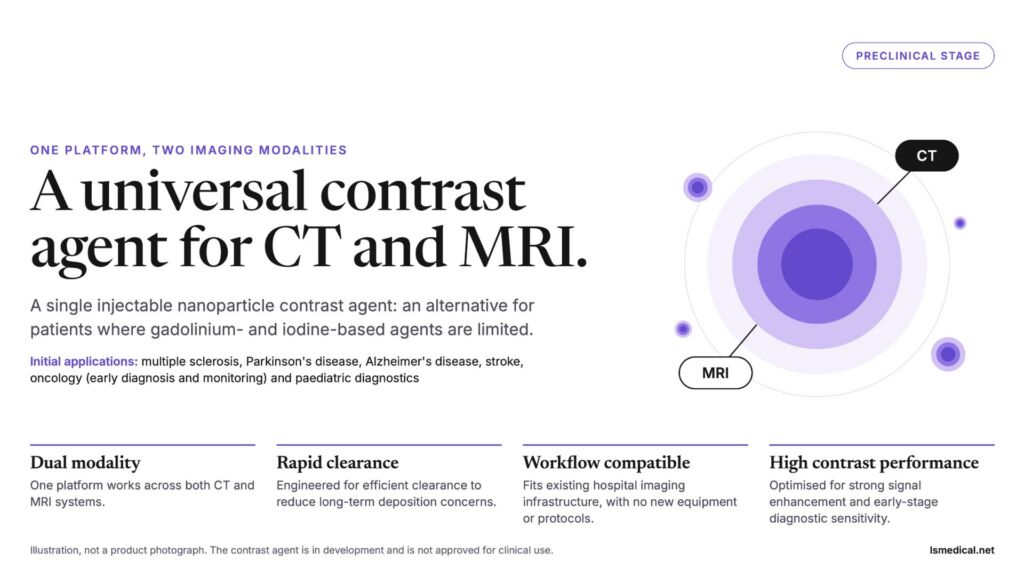
An Estonian healthtech company, LSMedical, a member of Tehnopol’s HealthTech community,aims to address this challenge. The company is developing a new generation of nanoparticle-based contrast agent that works with a single injection for both computed tomography (CT) and magnetic resonance imaging (MRI) examinations and is rapidly cleared from the body.
According to Liis Seinberg, Founder and CEO of LSMedical, the contrast agent field has remained largely unchanged for decades, despite the well-known limitations of existing solutions.
“I have been working on contrast agent synthesis for more than 20 years, starting during my doctoral studies at Kyoto University. Over time, it became clear that there had been no substantial innovation in the field for decades, even though the problems were well known. Those who need imaging the most are often the very people for whom current contrast agents are unsuitable: patients with multiple sclerosis, Parkinson’s disease, Alzheimer’s disease, stroke and cancer who require repeated examinations, as well as pregnant women, children and people with kidney disease,” explains Seinberg.
One Contrast Agent for Two Different Imaging Methods
One of the key distinguishing features of LSMedical’s solution is the ability to use the same contrast agent for both computed tomography and magnetic resonance imaging. Today, these examinations rely on different types of contrast agents: primarily iodine-based compounds for CT and gadolinium-based compounds for MRI. LSMedical’s solution brings these two imaging modalities together in a single approach.
According to the company, another important feature is the rapid elimination of the contrast agent from the body, which helps reduce the risk of accumulation. In addition, the solution has been designed to be compatible with existing medical equipment and imaging protocols. This is an important prerequisite for future adoption in healthcare facilities, as it would not require existing imaging infrastructure to be redesigned.
LSMedical’s competitive advantages also include protected intellectual property covering the contrast agent’s composition, synthesis, use across two imaging modalities, elimination from the body and manufacturing. This is complemented by years of accumulated expertise in synthesis, which is difficult to replicate.
Another important distinction lies in the choice of raw materials: LSMedical’s solution does not depend on vulnerable rare-earth element supply chains.
International Research Collaboration Is Bringing the Solution Closer to Clinical Trials
Developing a new contrast agent requires extensive scientific research, safety assessments and collaboration with clinical experts. LSMedical is working with international research partners on in vivo and toxicological studies.
The company’s research partners include King’s College London in the UK and the Karolinska Institute in Sweden. The company also collaborates with clinics in the United States, whose clinical experts are helping design future clinical trials and prepare for Phase I studies in humans.
LSMedical is led by materials scientist Liis Seinberg, who has more than 20 years of experience in contrast agent synthesis. In addition to her research background, she has previous experience founding and building the medical device manufacturing company Nordic Esthetic Group.
The company’s CFO, Gert Seinberg, brings 15 years of experience in startup financial management, including at Starship Technologies and Snyk. The team also includes several advisors, physicians, scientists and entrepreneurs from Estonia and London who have been involved with the company since its founding.
One of LSMedical’s most significant achievements to date has been conducting preclinical studies in collaboration with King’s College London, as well as building a strong team and an international network of advisors to support the further development of the solution and preparation for clinical trials.
This year, LSMedical was also selected for the NATO DIANA Innovation Accelerator. NATO DIANA is a programme that supports the development of innovative defence and dual-use technologies and helps companies bring their solutions into the defence and security sectors. Competition was intense: the company was selected from among 3,680 applicants for a cohort of just 150 of the most promising solutions across the Alliance.
At the same time, building a deeptech company in the medical sector is a demanding process. LSMedical identifies securing long-term investors in Estonia and the lack of public investment support for the medical sector as two of its biggest challenges.
The Goal: Clinical Trials and Market Authorisation in Europe and the US
In the coming years, LSMedical will focus on completing preclinical safety studies, bringing its manufacturing to Good Manufacturing Practice (GMP) standards and progressing towards its first clinical trials in humans.
Looking five years ahead, the company aims to have its contrast agent in late-stage clinical trials and moving towards market authorisation in both Europe and the United States.
LSMedical’s broader ambition is to make contrast-enhanced imaging safely accessible to all patients, including those who are currently unable to benefit from the best possible diagnostics due to the limitations of existing contrast agents.
Seinberg believes that the next Estonian unicorn could emerge at the intersection of deep technology and healthcare.
“We hope that Estonia’s next unicorn will come from deep tech and healthcare, because this is where science can change the lives of millions of people.”
You might be interested in

Four solutions, one important lesson: Technology must be built around people’s needs
The first stage of the Welfare Technology Program, implemented jointly by Tehnopol, Civitta and the Estonian Academy of Arts, has concluded, with participating teams reaching important milestones in developing their solutions. The...
Tehnopol’s mentor community came together to strengthen collaboration and share experiences
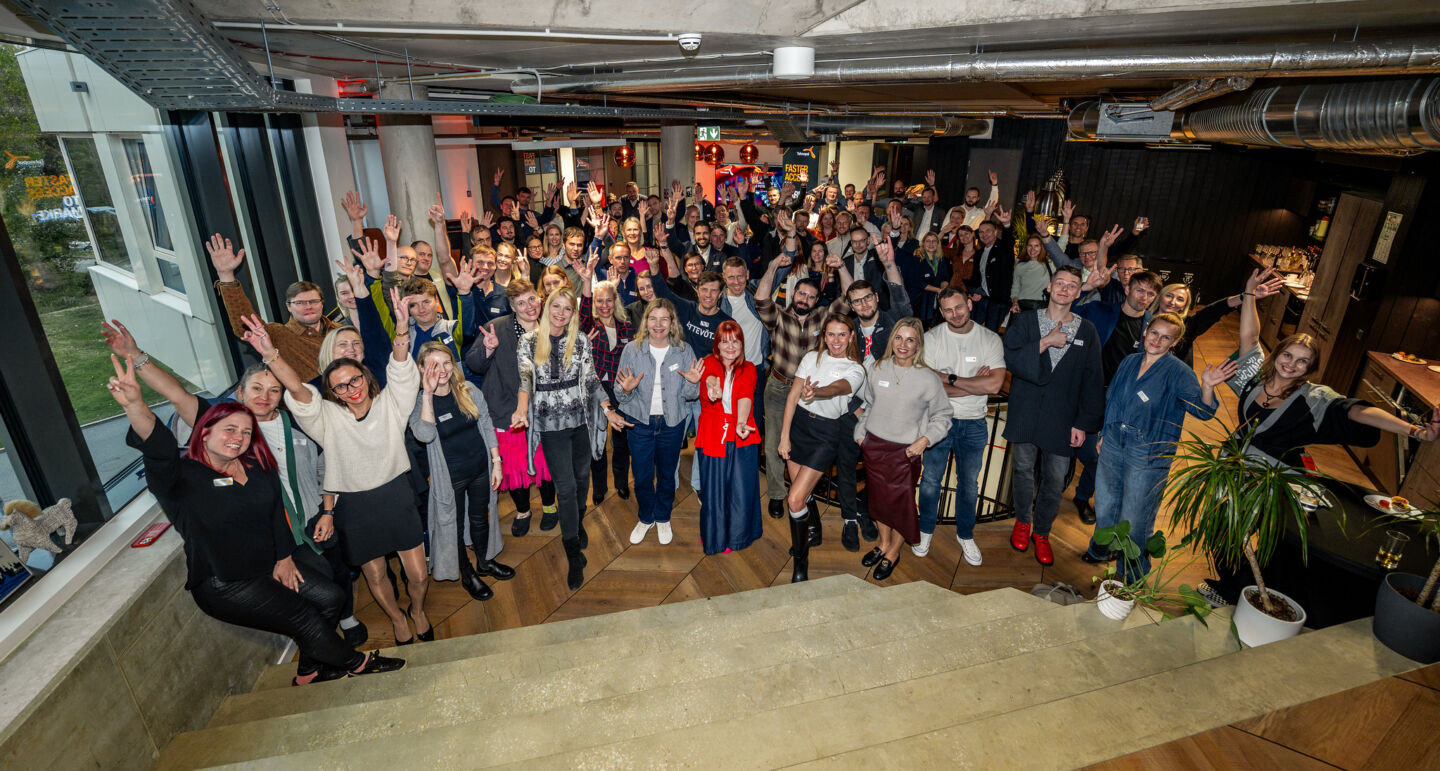
On 14 October, mentors from a wide range of fields gathered at Tehnopol’s office to share experiences, exchange ideas and strengthen collaboration within the community. The event provided an opportunity to learn...
From medication robots to smart sensors: New solutions to support older people’s independence showcased at Demo Day
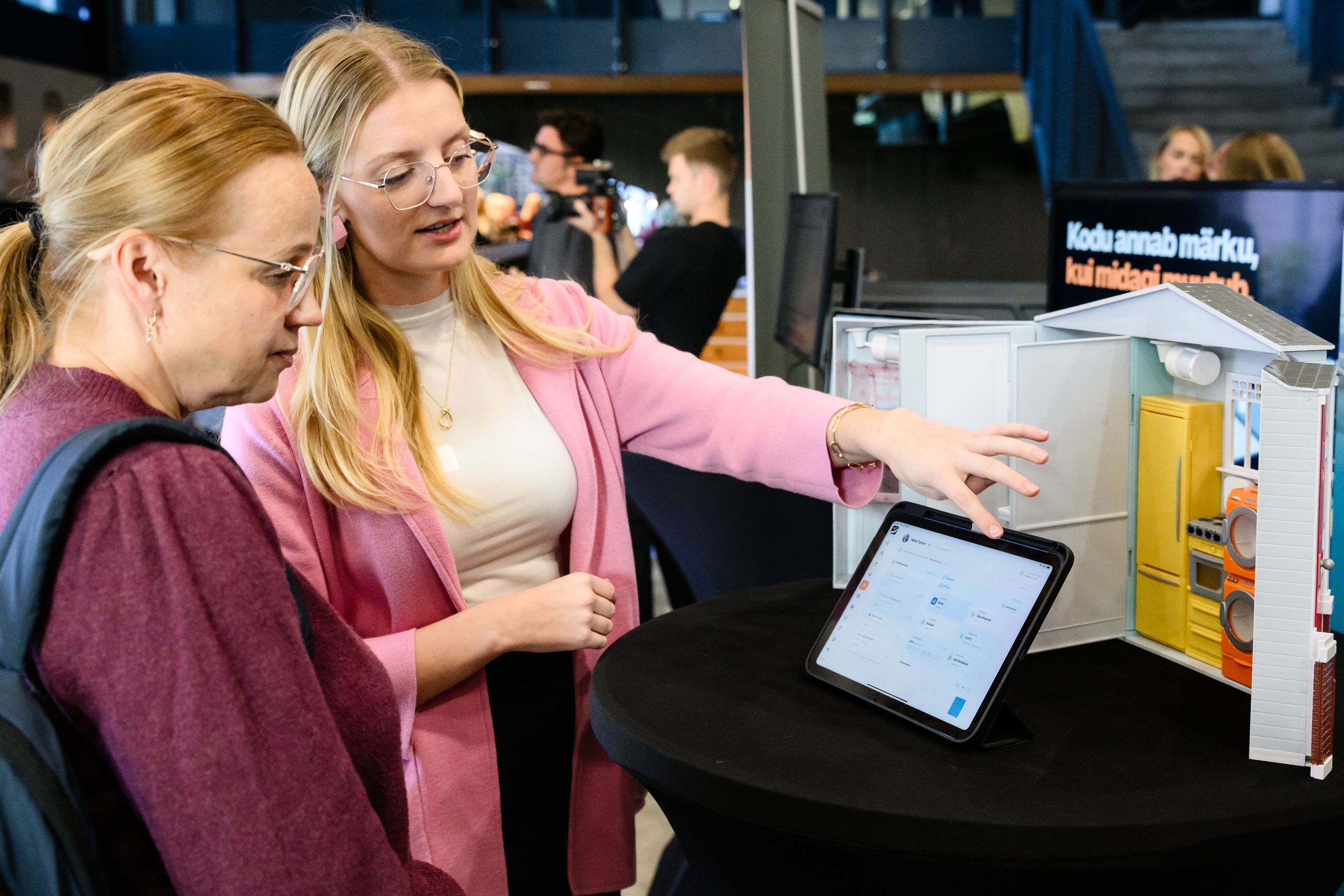
At the Welfare Technology Development Programme Demo Day, held at the Estonian Academy of Arts on 22 October, 19 teams presented technological solutions designed to help older people and adults with disabilities...