
New digital support platform for cancer patients being tested in Saaremaa
A pilot project has been launched in Saaremaa to develop and test a digital support environment for cancer patients. The aim of the solution is to bring together information about services supporting the cancer care journey and peer support opportunities in one place. The pilot project is supported by the Ministry of Social Affairs’ Welfare Technologies Innovation Programme.
The prototype of the solution, developed under the leadership of Onkoloogika, is now open for testing by people in Saare County who have received a cancer diagnosis, are undergoing treatment, are recovering from cancer, or are supporting a child with cancer.
According to Siiri Rannama, Head of the Saaremaa Cancer Society and Board Member of Onkoloogika, one of the biggest challenges after receiving a cancer diagnosis is navigating a completely new situation.
“After receiving a cancer diagnosis, people should not have to spend their energy searching for where to get help. That energy should be focused on treatment and on living their lives,” said Rannama.
Support exists, but information is fragmented
In addition to medical treatment, people diagnosed with cancer often have to cope with uncertainty, fear and practical questions. They may need mental health support, information about benefits and social services, assistive devices, or help returning to work. They may also benefit from connecting with others who have gone through a similar experience.
Support is provided by public institutions, municipalities, healthcare organisations, patient organisations and private companies, but information about these opportunities is often scattered across different sources. Patients and their loved ones frequently have to figure out themselves who to contact, what steps to take and which service best fits their situation.
The aim of the pilot project is to explore how existing support can be made more visible and easier to access. As part of developing the potential solution, the project team is mapping the needs of cancer patients, interviewing users and partners, and collecting feedback on the prototype.
“We want to understand together with people in Saaremaa and our partners how to bring together essential information, services, peer support and communities in a way that feels more logical and accessible for people,” said Rannama.
The digital environment may include information about peer support, mental health services, social services, rehabilitation, returning to work, assistive devices and patient organisations. Which services will be included in the final solution and how the platform will be structured will depend on the results of the testing phase.
The next step is to involve family members as well
In the next phase of the project, Onkoloogika also plans to explore the needs of people close to cancer patients. Family members often help with finding information, communicating with doctors and authorities, organising everyday life and providing emotional support.
Therefore, the project aims to understand what kind of support relatives themselves need and whether better organised, personalised information could help reduce their burden.
Saaremaa was chosen as the pilot location because it has an active patient organisation and an established cooperation network between healthcare, social services and community representatives.
In a smaller community, it is easier to identify where people struggle to find support during their care journey, where information gaps occur and which services are not sufficiently visible or accessible.
The project involves, among others, the Saaremaa Cancer Society, Saaremaa Municipality Government, Kuressaare Family Health Centre, Estonian Cancer Network, Estonian Unemployment Insurance Fund, Estonian Health Insurance Fund, Peaasi.ee and organisations representing people with disabilities. Hedman provides free legal support for the project.
Partners contribute by mapping patient needs, existing services and opportunities to connect them more effectively.
The prototype will be tested in Saaremaa during September, and the project will run until the end of October. It is funded through the Ministry of Social Affairs’ Wellbeing Technologies Innovation Programme.
If the solution proves valuable for patients and partners, Onkoloogika plans to expand it across Estonia. In the future, a similar approach could also support people living with other chronic conditions.
Test users are invited to participate
Participation in the pilot project does not require advanced digital skills, but participants should be able to use a computer or smart device. Test users will be asked to provide feedback on what kind of support they need at different stages of the cancer journey, where it is currently difficult to find help, and how easy the new environment is to use.
People interested in participating can register at app.onkoloogika.ee.
The project is co-funded by the European Union through the European Regional Development Fund.
Photo: private collection
The article was published on 19 August 2026 on the Saarte Hääl website.
You might be interested in
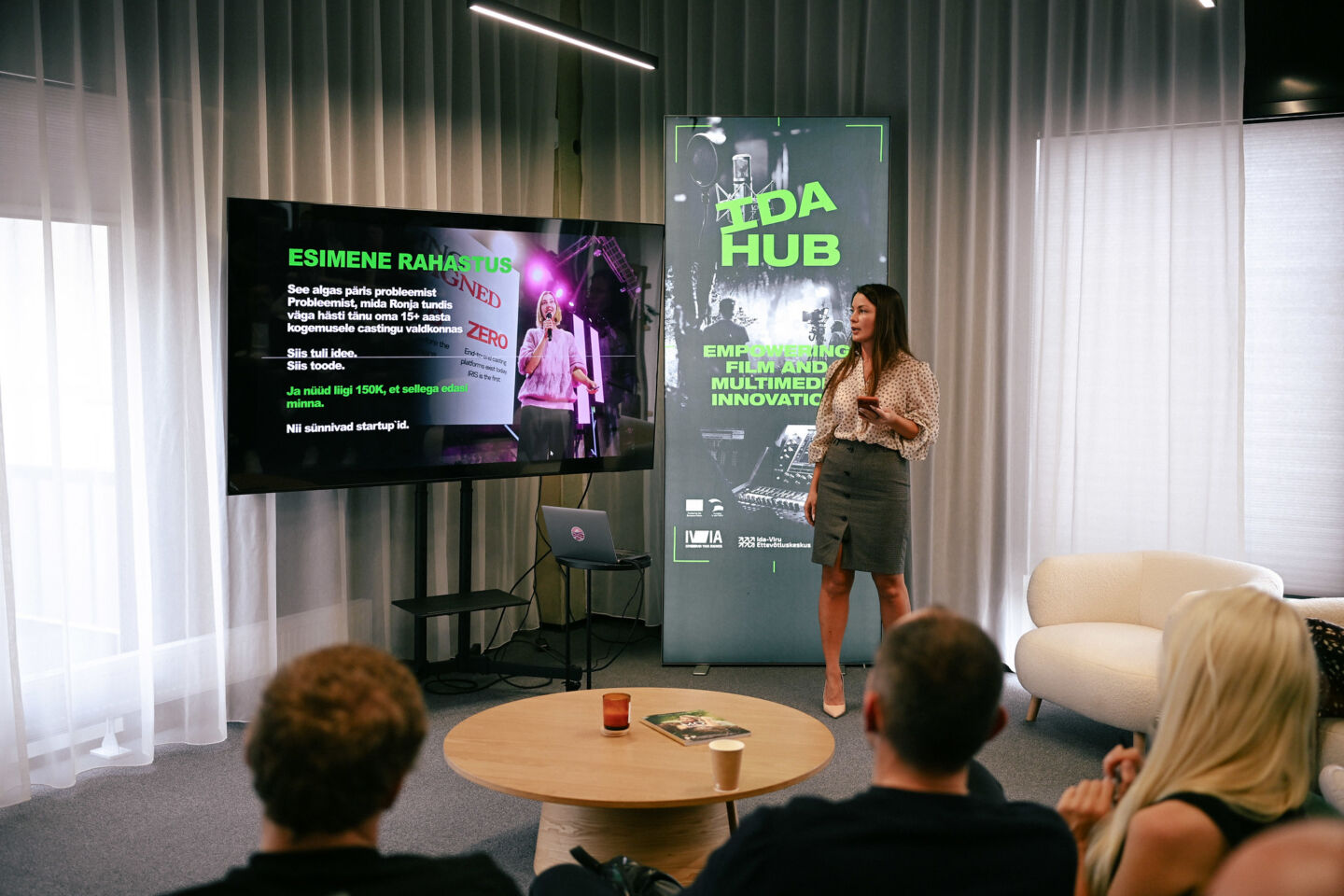
Film and Multimedia Accelerator invites teams to combine creativity and technology
Tehnopol invites teams from the creative industries and early-stage startups to apply for the six-month IDA Hub Film and Multimedia Accelerator. Applications are open until 18 October. The aim of the Tehnopol...
Paulin Jürjens to lead Tehnopol’s HealthTech focus area
From 1 October, Paulin Jürjens will lead the HealthTech focus area at Tehnopol Science and Business Park. Jürjens has so far worked at Tehnopol as a HealthTech Development Specialist. The current Head...

City Resilience Hack names winning solutions to strengthen cities’ crisis resilience
Commu App, Resilient Europe, Supersight, Sillan, Fanera, LifesaverSIM and Q-Responsify were named winners of City Resilience Hack, held in Tallinn on 24–25 September. During the 48-hour hackathon, participants tackled challenges set by...