
Startup Story: Unplugged X NATO DIANA Estonian Accelerator
Subsea vehicles, sensors and infrastructure need reliable access to power and data while remaining underwater. Physical connectors make that difficult: corrosion, wear and flooding affect reliability, while mating and de-mating equipment can require recovery or human intervention.
However, wireless subsea connection technology allows power and high-speed data to be transferred through water using inductive coupling, without physical plugs or exposed contacts.
Unplugged, an alumni of the NATO DIANA Estonian accelerator, has developed this technology for autonomous underwater vehicles, sensors, docking stations and resident remotely operated vehicles, which remain deployed underwater and return to subsea docking stations between missions. Its systems transfer power from 50 W to 25 kW and data at speeds of up to 10 Gbps.
According to the Norwegian deep-tech company, its gigabit communication technology has been qualified to a depth of 9,000 metres. Its products can operate at depths exceeding 6,000 metres and have undergone extensive testing in accordance with API 17F, an industry standard for subsea production control systems.
For offshore operators, this can extend uptime and reduce recovery operations. In defence applications, the same technology can help keep unmanned platforms charged, connected and on station without surfacing.
From a wireless light bulb to the ocean floor
The work behind Unplugged began in the early 2000s in Kristiansand, Norway, when founder Geir Olav Gyland started exploring how electrical power could be transferred without physical connectors.
His first concept was a wireless light bulb. The experiment led him towards wider applications for inductive power transfer and eventually to the technology that now underpins Unplugged’s subsea systems.
Gyland contributed to the early development of commercial wireless charging and worked alongside the standardisation effort that produced Qi, the global standard behind wireless charging in phones, wearables and other consumer devices.
In 2005, the team built its first inductive connector. That milestone turned the underlying physics into a practical system and gradually shifted the company’s focus towards the harsher conditions of subsea operations.
Kim Tommy Humborstad later joined the technical core, bringing expertise in software, embedded control and system architecture. Gyland leads the inductive power technology, while Humborstad focuses on the control systems and secure communications required for field use.
The company was originally known as WPC and rebranded as Unplugged in the early 2020s.
More than 240 days underwater
One of the clearest demonstrations of the technology comes from Equinor’s Njord field, an offshore oil and gas field in the Norwegian Sea. Unplugged’s docking station supported a long-term resident remotely operated vehicle through more than 240 days of continuous subsea operation and over 800 successful docking missions. According to the company, the deployment set a world record for continuous subsea residency and helped pave the way for wider industry adoption.
Unplugged has also demonstrated underwater refuelling in motion at four knots.
These results provide operational evidence for technology that must continue working at depth, across repeated docking cycles and over long deployments.
However, the subsea industry adopts new infrastructure cautiously. Equipment is difficult to access and expected to operate reliably in demanding conditions, so the threshold for replacing established technology is high.
For Unplugged, one of the main challenges has been gaining acceptance in a market where conventional connectors remain dominant despite their limitations.
The company has also had to balance low-volume, customer-specific development with product qualification, scalability and the creation of a standardised portfolio. Some of its products have now been in operation for more than ten years, supported by continued work on electrical and mechanical robustness.
Defence use and NATO DIANA
The technology is inherently dual-use. Commercial offshore operations need greater uptime and fewer interventions, while defence users need persistent unmanned systems that can remain powered and connected underwater.
Unplugged applied to NATO DIANA to accelerate the growth of its technology, connect with partners and end-users, and strengthen its market penetration across the NATO ecosystem.
The company joined the NATO DIANA Estonian Accelerator to explore how its existing subsea platform could support defence applications and autonomous undersea capability.
Within the next 12 months, Unplugged plans to strengthen its presence in the Nordic region and expand into the Baltic markets through partnerships with customers and operators.
Over five years, the company aims to become a globally recognised provider of subsea residence solutions. Its plans include further technological development and pursuing opportunities through NATO DIANA’s Rapid Adoption Service, particularly in regions where the technology can improve operational efficiency, safety and sustainability.
A founder’s reading list
Thomas J.J. Meyer, Chief Growth Officer at Unplugged, recommends two books to other founders: Crossing the Chasm by Geoffrey A. Moore and Thinking, Fast and Slow by Daniel Kahneman.
The first speaks directly to the challenge of moving specialised technology into wider adoption. The second examines how people make decisions, a useful perspective when introducing new systems into cautious and technically demanding markets.
The NATO DIANA Estonian Accelerator is operated by Tehnopol and Sparkup Tartu Science Park. It is funded by the Estonian Ministry of Economic Affairs and Communications, with support from the Ministry of Foreign Affairs, the Ministry of Defence and the City of Tallinn.
Photo: Eiko Lainjärv
You might be interested in

Startup story: Yours Global X Tehnopol Startup Accelerator
Each year, dozens of high-potential startups develop their products and services in Tehnopol Startup Accelerator and its special accelerator programmes. One of the teams currently participating in the Tehnopol Startup Accelerator is...
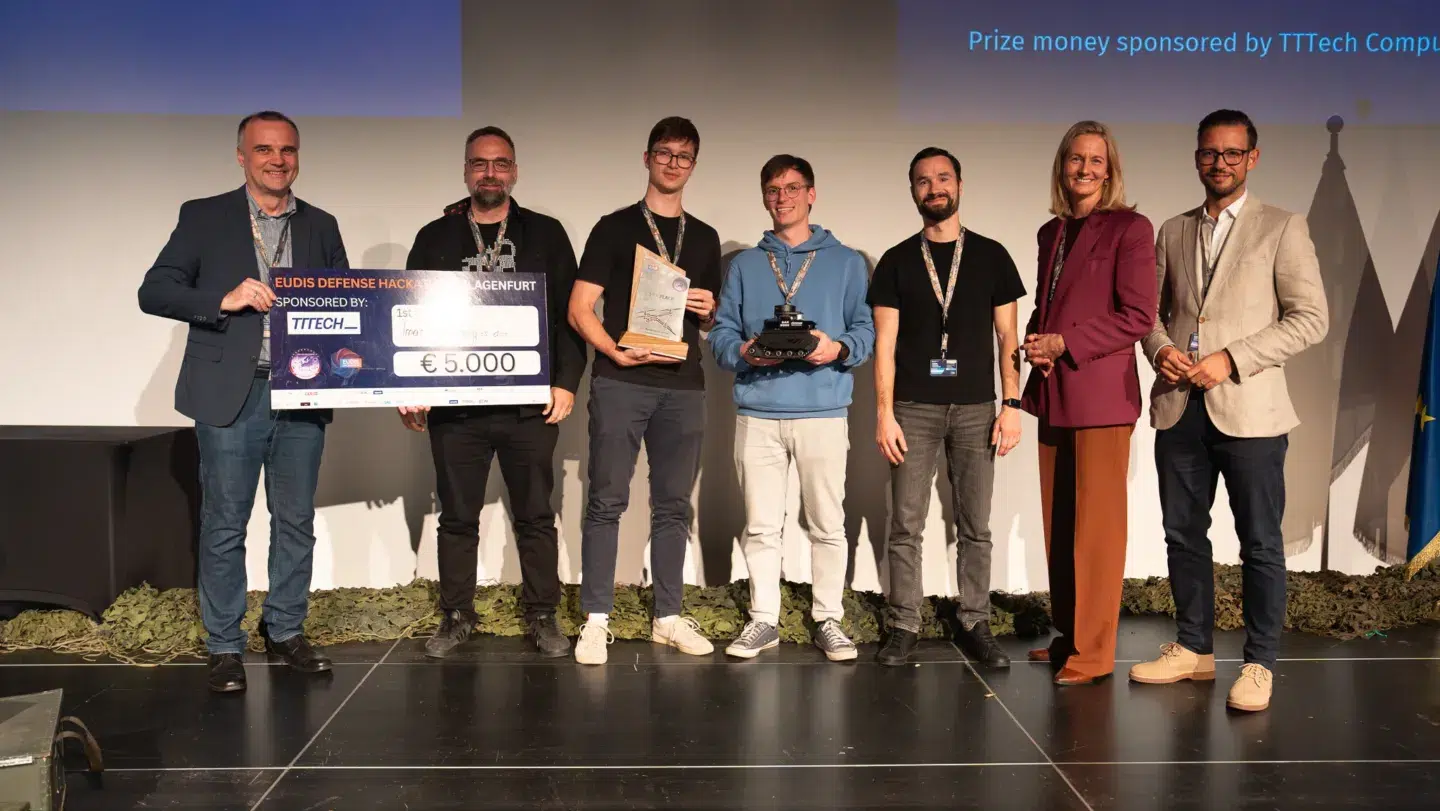
EUDIS Defence Hackathon Autumn 2026: Meet the Innovators Shaping Battlefield Autonomy
From 15 to 17 October 2026, the EUDIS Defence Hackathon brought together innovators at eight locations across Europe to tackle a strategic theme at the heart of Europe’s defence and security priorities:...

Startup story: Setvox X Film and Multimedia Accelerator
Each year, dozens of high-potential startups develop their products and services in Tehnopol’s accelerator programmes. One of the teams currently participating in the Film and Multimedia Accelerator is Setvox. Setvox is a...