
What comes after mass drone warfare?
Military surveillance is moving towards larger networks of autonomous systems that can keep collecting information even when individual sensors are lost, jammed or taken offline. Janne Hietala has spent the past few years testing what that kind of distributed surveillance looks like in practice. He is CEO and co-founder of Finnish deep-tech company Kelluu, a NATO DIANA alumnus that builds autonomous hydrogen-powered airships for long-duration aerial monitoring. Hietala will bring that company perspective to Defence Innovation Day in Tallinn on 21 September, where he will join a discussion on how civilian innovation becomes usable defence capability.
Kelluu has completed two phases of NATO DIANA and tested its technology in Arctic conditions, including sustained GNSS jamming, where satellite navigation signals are deliberately disrupted, as well as in NATO exercises. In April 2026, the company raised a €15 million Series A led by the NATO Innovation Fund.
“We suddenly move from the exquisite to mass-scale,” Hietala says.
By “exquisite”, Hietala is referring to high-end surveillance platforms fielded in very small numbers, such as the Global Hawk, a large long-endurance unmanned surveillance aircraft. He sees intelligence, surveillance and reconnaissance, or ISR, moving towards more distributed architectures where many more autonomous systems collect information as part of a larger system.
From exquisite to mass
Kelluu’s autonomous airships are designed to remain over an area for long periods while carrying different sensors, providing continuous aerial monitoring rather than only brief snapshots. Its fleet has logged more than 50,000 kilometres, including missions lasting 12 hours in Arctic conditions.
Hietala sees miniaturisation as one of the technologies enabling much larger autonomous systems. He points to new generations of radio-frequency systems-on-chip and embedded GPUs, compact components that bring more radio processing and computing power directly onto smaller autonomous platforms.
His comparison runs from a strategic platform such as Global Hawk, effectively a unit of one, to systems potentially made up of thousands or tens of thousands of autonomous units operating together. Expensive, highly capable platforms still have a role, but many more sensing nodes can be built around them.
Kelluu’s testing has repeatedly combined harsh weather with electronic interference. Its airships have operated at temperatures as low as minus 33 degrees Celsius and through sustained GNSS jamming. During NATO-related testing in Finland, Hietala says one December exercise combined heavy icing with jamming.
“We call it home,” he says.
Hietala compares it to designing an autonomous platform for Mars or Venus, where the operating environment would determine many of the engineering choices. If icing and interference are expected conditions, they need to shape the technology from the beginning.
The same logic applies to testing. Field reports and technical evidence matter, but military users still want direct experience of the system. “Defence customers still want to see with their own eyes,” Hietala says.
Kelluu did this during NATO’s Steadfast Dart 26 exercise in Germany, where it integrated real-time video and geolocation data into the Maven Smart System, a US military AI-enabled platform used to combine and analyse battlefield data from multiple sources, during an exercise involving around 10,000 troops from 13 Allied nations.
“Technical demonstrations are a great initial step towards field conditions,” Hietala says. “They answer whether the technology works in the operational environment. Live exercises answer whether we can deliver mission success.”
Kelluu’s time in NATO DIANA also exposed the company to another challenge: moving emerging technology from testing towards adoption. One route was DIANA’s Rapid Adoption Service, which connects innovators with Allies and NATO bodies for further development, prototyping and deployment opportunities. Hietala recalls working through the process while it was still new, with Kelluu, DIANA and Allied nations having to work out together “how do we actually get this done”.
According to Hietala, one of Kelluu’s early milestones through the service was moving from an initial meeting to deployment in the field within roughly three months. He says later cases have moved even faster.
The next race is over decisions
Russia’s war against Ukraine has already changed expectations around autonomy, cost and scale. Hietala points to drones as a civilian technology whose cost structure helped make deployment at huge scale possible once military use accelerated. “We are still digesting the implications, but not looking onwards as much as needed,” he says. “We are in a constant race to keep up, where we also should be looking how to get ahead.”
He expects collaborative autonomy, sensing across different domains and AI to become more closely connected. Persistent sensing also creates a growing body of data, which Hietala sees as strategically important as world foundation models and radio-frequency foundation models develop.
“Having infrastructure to collect and maintain that data is long-term competitive advantage. Not just for Kelluu but for the Alliance.”
Hietala compares the direction of travel with high-frequency trading in finance, where advantage became strongly linked to how quickly information could be received, processed and acted upon.
As autonomous sensors multiply, the advantage will go to those who can keep collecting information, combine it across systems and turn it into action faster than the other side. “We will end up competing on nanosecond decision speeds, which is going to determine who will win or lose.”
Janne Hietala will take part in the panel “Dual-Use in Action: From Civilian Innovation to Defence Capability” at Defence Innovation Day. He will be joined by Kaimo Kuusk, Permanent Secretary at the Estonian Ministry of Defence, and Kadri Tammai, Regional Director, NATO DIANA. The discussion will be moderated by journalist Kaur Maran.
Defence Innovation Day takes place on 21 September at Kultuurikatel in Tallinn. It is the first day of Estonian Defence Week. Participation is free of charge, but registration is mandatory and subject to approval. The event is at capacity, but you can join the waiting list.
The event is organised by Tehnopol and the Ministry of Economic Affairs and Communications through the NATO DIANA Estonian Accelerator. It is supported by the Estonian Ministry of Defence. One thematic block is shaped with the input from Sparkup Tartu Science Park.
You might be interested in
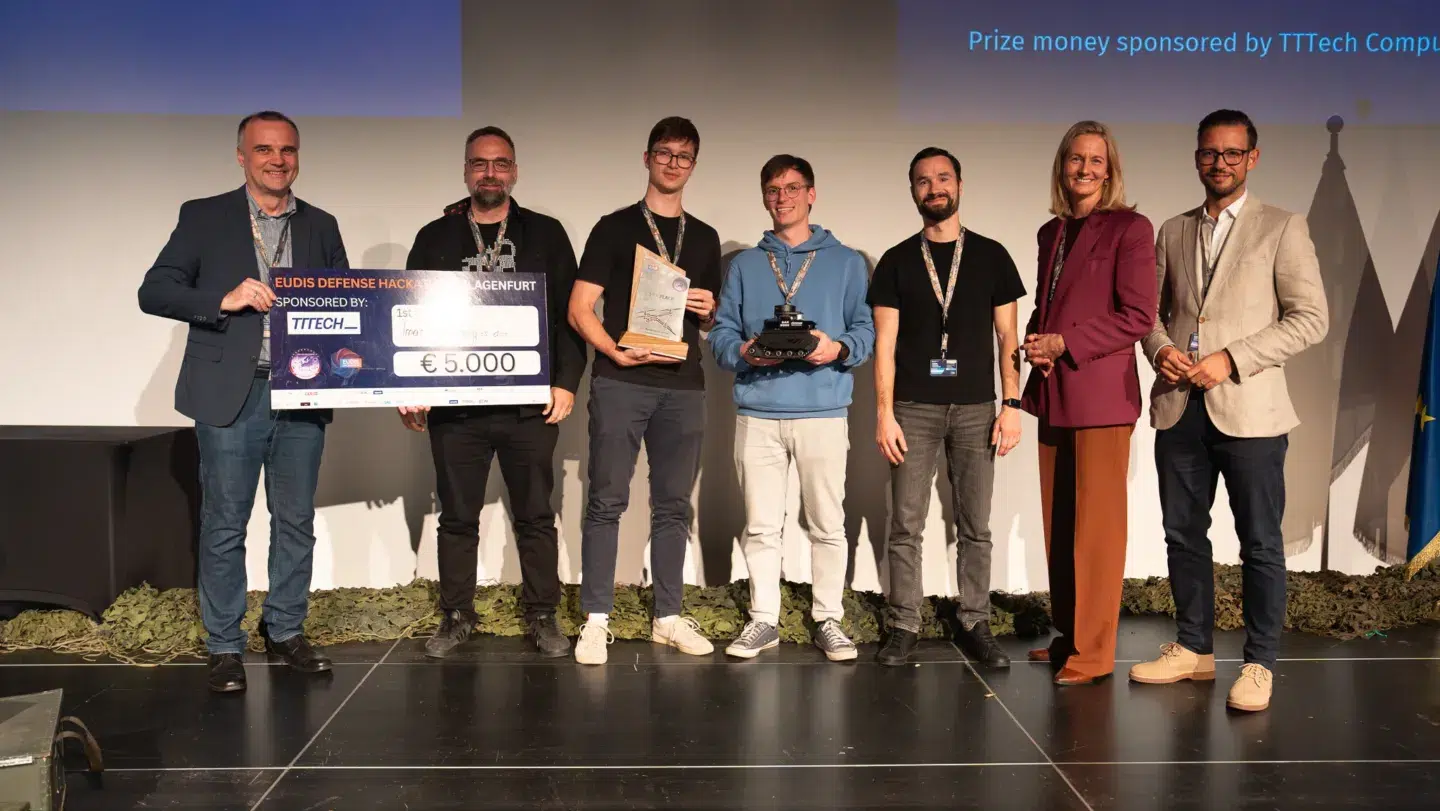
EUDIS Defence Hackathon Autumn 2026: Meet the Innovators Shaping Battlefield Autonomy
From 15 to 17 October 2026, the EUDIS Defence Hackathon brought together innovators at eight locations across Europe to tackle a strategic theme at the heart of Europe’s defence and security priorities:...
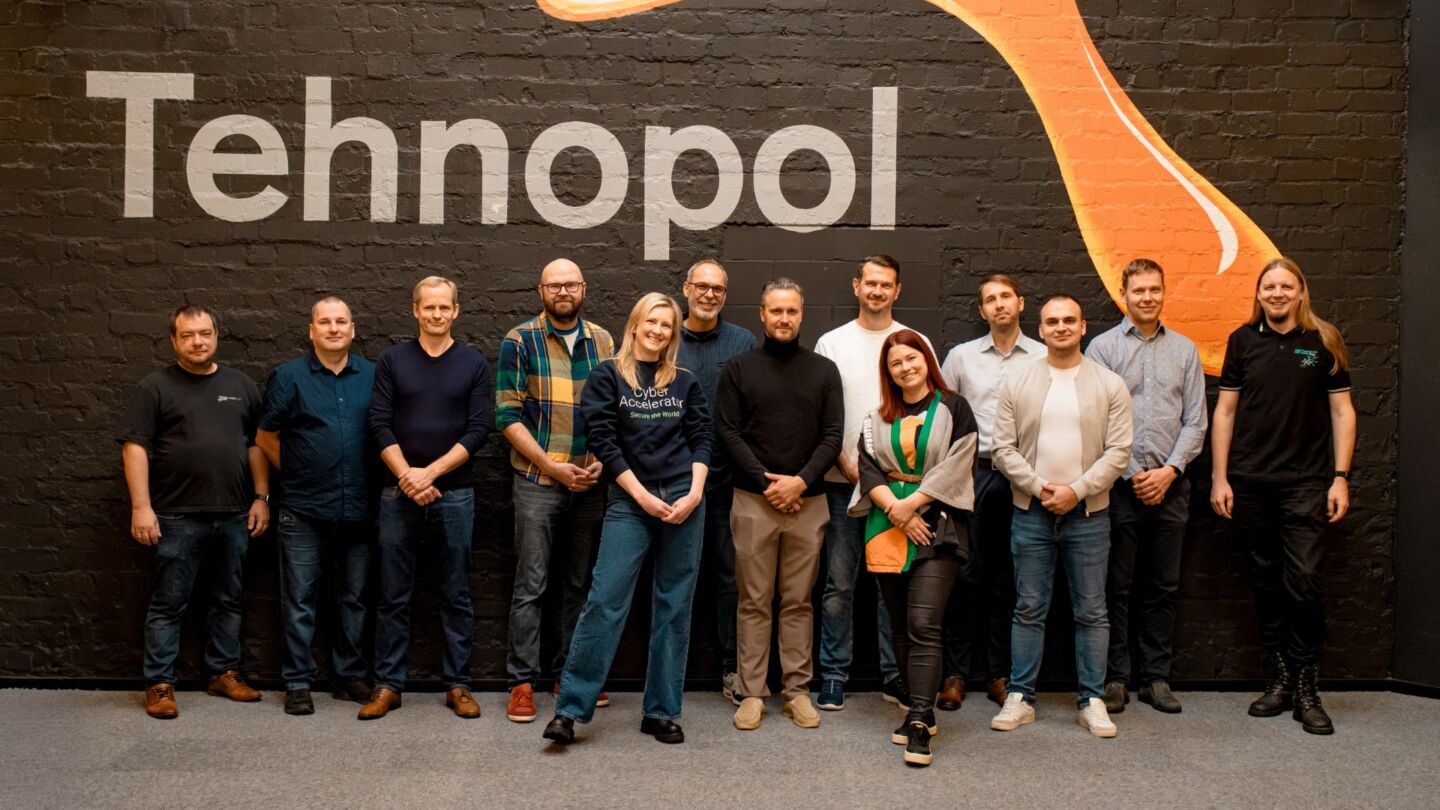
Seven companies selected for Cyber Accelerator to develop new solutions for preventing cyber threats
Tehnopol Accelerator, in cooperation with the Estonian Information System Authority (RIA) and the European Cybersecurity Competence Centre (ECCC), runs the Cyber Accelerator, which supports cybersecurity startups in developing and bringing new products...
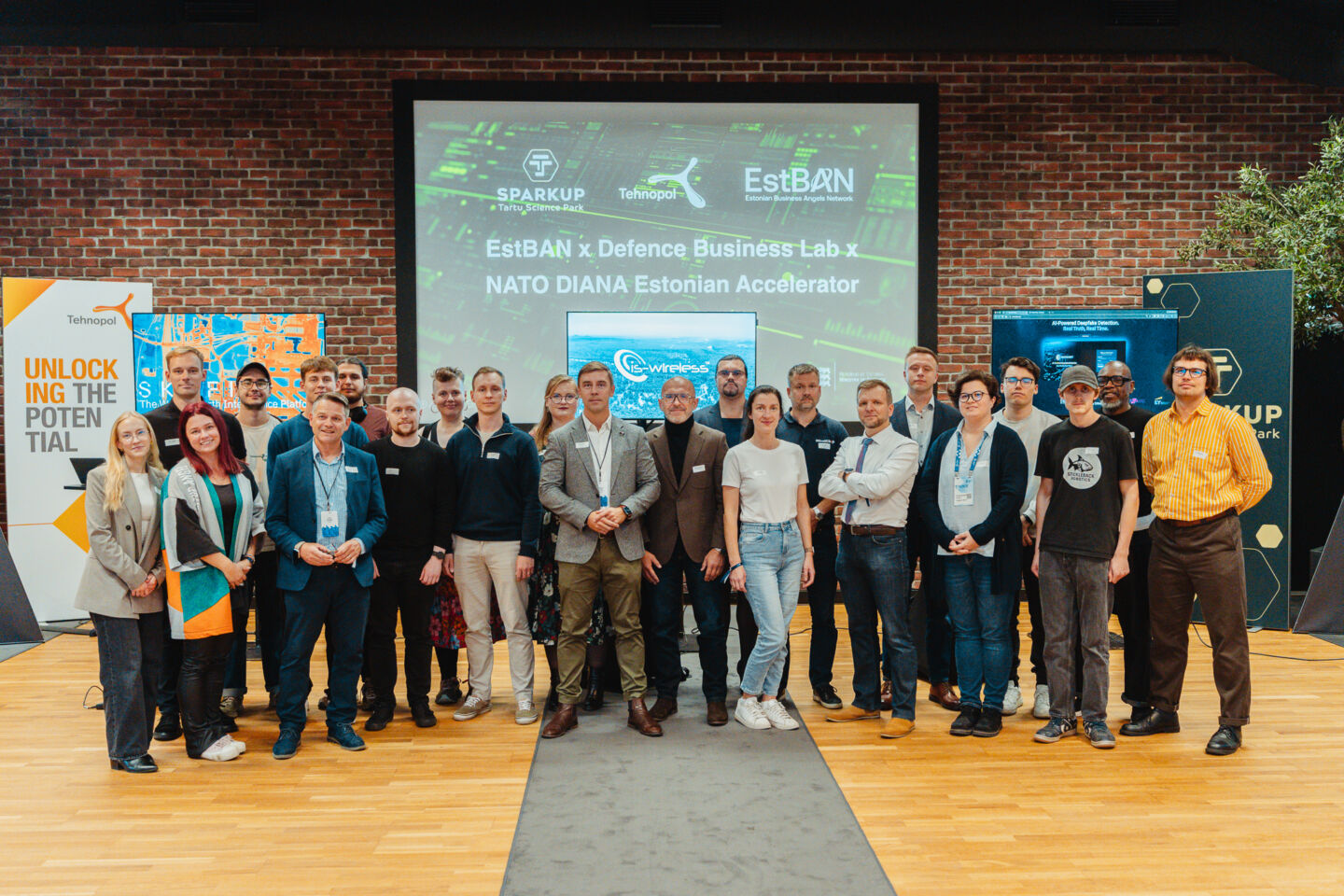
From Defence Business Lab to NATO DIANA: one stage, different steps in the defence innovation journey
On 24 September, 13 defence and dual-use companies presented their solutions at the Defence Business Lab Demo Day: ten startups completing the three-month pre-accelerator and 3 alumni of the NATO DIANA Estonian...