
The next leap forward in Estonian healthcare depends on collaboration and a willingness to change
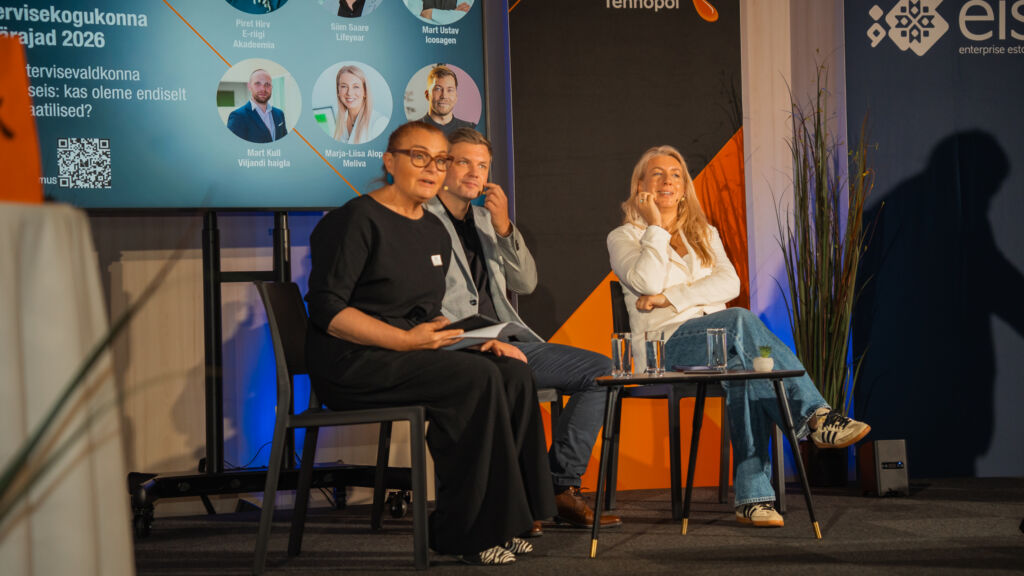
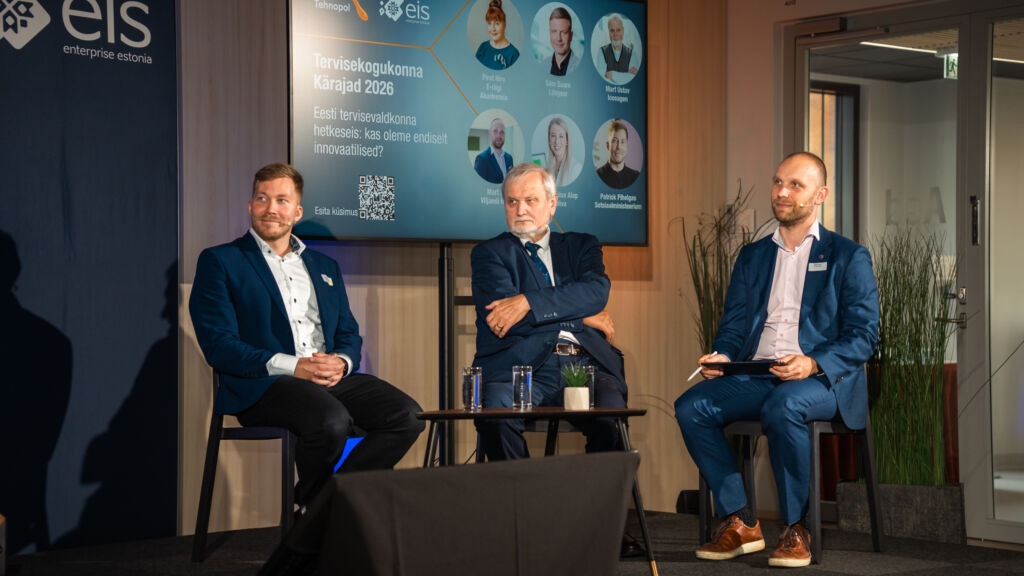
Estonia is seeing more healthtech companies and new solutions emerge than ever before, but the healthcare system’s capacity to adopt them has not kept pace. At a panel discussion during Tervisekogukonna Kärajad, held in Viljandi on 10 September, representatives from healthcare, business, the public sector and biotechnology repeatedly returned to the same challenge: Estonia is good at running pilots, but turning a successful pilot into a lasting solution remains difficult.
Piret Hirv, who moderated the panel discussion “The state of healthcare in Estonia: are we still innovative?”, opened by asking what actually counts as innovation. The participants largely agreed that a new technology or a successful pilot project is not enough in itself.
According to Siim Saare, Programme Manager at Health Founders Estonia and CEO of Lifeyear, innovation is first and foremost a practical solution that actually reaches patients and the healthcare system. Marja-Liisa Alop, CEO of Meliva, also emphasised tangible benefits for patients. From the perspective of Mart Kull, a member of the management board of Viljandi Hospital, innovation should be measured by solutions already adopted in healthcare at a meaningful scale, rather than simply by the launch of a project or startup.
But what happens to a solution after a successful pilot? According to the panellists, there is no simple answer. Healthcare is understandably a cautious sector, as patient safety leaves little room for experimenting with new solutions without careful consideration. At the same time, adopting technology takes time from healthcare professionals, and under the current funding model, hospitals may not be able to give doctors or nurses the time they need to work on innovation. What is more, if a new technology helps patients avoid hospital stays or appointments, a healthcare provider could even lose revenue under the current funding system. As a result, innovation often happens because of staff enthusiasm rather than because the system itself encourages it.
For early-stage healthtech companies, the challenge is different. Saare pointed out that a new wave of healthtech companies is emerging in Estonia and interest in the sector is strong. However, founders need to understand not only the technology but also clinical needs, workflows, regulations and the future funding model from the outset. A large number of pilots does not in itself guarantee that a solution will reach the market.
Given Estonia’s small domestic market, healthtech companies generally need to think internationally from day one. At the same time, the Estonian healthcare system could offer companies something particularly valuable for entering foreign markets: their first real customer reference. The panel suggested that hospitals, family medicine centres and other healthcare providers could take a more active role as early customers, helping a number of new solutions each year progress beyond piloting to their first real-world use. Such a reference would help companies demonstrate that their solutions work, attract investment and expand into larger markets.
Not all healthcare innovation, however, requires tens of millions of euros. Mart Ustav, CEO of Icosagen, highlighted the realities of biotechnology and drug development, where development cycles can last ten years and the necessary investment cannot be recouped from the Estonian market alone. For this type of innovation, a global market focus is essential from the start.
Alop drew a comparison with more everyday forms of innovation: AI and new digital tools already allow healthcare professionals to automate tasks such as staff scheduling, inventory management and other processes. These changes may not seem as groundbreaking as a new medicine, but if they give nurses and doctors more time for patients, their practical impact can be significant.
The discussion also raised the question of how much new technology the government should develop itself. The panellists felt that it makes little sense to spend limited resources building solutions from scratch when suitable technology may already exist in Estonia or internationally. The ability to identify, test, procure and integrate good existing solutions is just as important as developing new ones.
The overall conclusion was that bringing innovation into everyday healthcare requires changes across the system. Companies need better connections with hospitals and funders, healthcare providers need stronger incentives to adopt innovation, the public sector needs more open standards and better opportunities for data use, and developers need more accessible hospital information systems. Innovation also depends on people who have the time, skills and willingness to make change happen. Technology alone will not solve the problem.
Watch the event recording here.
Tervisekogukonna Kärajad celebrated its 10th anniversary this year. The event took place on 10 September at Tervikum, the hospital and health centre in Viljandi County.
Over the past ten years, Tervisekogukonna Kärajad has brought together representatives from healthcare, research, business and the public sector to discuss the sector’s most important issues and explore the future of health innovation in Estonia. This anniversary year, we looked back at the healthtech landscape in 2016, the ambitions and challenges of the past decade, and whether the decisions we make today will help us reach our goals for 2035.
The event was supported by the Estonian Business and Innovation Agency (EIS).
You might be interested in
From scientific discovery to real-world impact: What researchers should know about entrepreneurship
Turning a scientific discovery into a successful business requires more than innovative technology. Researchers must learn to identify real-world problems, work with experts from different fields and understand what it takes to...
New digital support platform for cancer patients being tested in Saaremaa
A pilot project has been launched in Saaremaa to develop and test a digital support environment for cancer patients. The aim of the solution is to bring together information about services supporting...
Paulin Jürjens to lead Tehnopol’s HealthTech focus area
From 1 October, Paulin Jürjens will lead the HealthTech focus area at Tehnopol Science and Business Park. Jürjens has so far worked at Tehnopol as a HealthTech Development Specialist. The current Head...