
When should a scientific breakthrough become a company?
How does a scientific breakthrough turn into a company? When is it strong enough to become a scalable solution? And how can we recognise the moment when an idea born in the lab is ready to move towards the market, customers and international growth?
These questions were discussed at Latitude59 in the conversation “Science Doesn’t Scale Itself – And Not Every Breakthrough Should” between Anu Puusaag, Head of DeepTech at Tehnopol, and Kärt Tomberg, founder of ExpressionEdits, a biotechnology company that grew out of the University of Cambridge. At the heart of the discussion was one of the most complex questions in science-based entrepreneurship: how to bring deep scientific knowledge out of the lab and into the world in a way that creates real value.
Tomberg’s path to entrepreneurship did not start with a classic startup idea. She described herself as a scientist whose focus had long been on genetics and an academic career. The shift came in 2020, when the pandemic forced scientists around the world to think about how their knowledge could be applied quickly to solve new problems. It was from this situation that the scientific direction later became ExpressionEdits.
The core of the company lies in how we communicate with cells. Tomberg explained that while DNA and RNA are widely known concepts in biology, producing proteins is still something humans cannot do directly themselves. Instead, living cells are used and encouraged to produce the protein that is needed. ExpressionEdits approaches this question differently: how can we speak to cells in a more natural and precise “language”, so that protein production becomes clearer, more efficient and more predictable?
Strong science alone is not enough
ExpressionEdits is a good example of deep tech, where building a company does not start with a fast product or a simple market need, but with years of scientific work. In biotechnology, people often do not talk about products in the same way as they do in software companies. The journey of drug development and biological technologies is long, expensive and involves several different players. Often, the scientist who makes the discovery is not the same party that eventually takes it to the end market.
According to Tomberg, when talking about scaling science, the first step is to acknowledge one uncomfortable truth: most science does not work. This does not mean bad science. It means that science is often about testing, failing and trying to understand how nature works in a situation where the answer is not known in advance. A scientist may carry out the best experiments and build a logical theory, but if nature does not work in the way they assumed, the discovery will not become a scalable solution.
That is why the question is not only how to bring more science to market. It is just as important to recognise when science contains something that could have an exceptional impact. Tomberg pointed out that in her own case, the environment and the people around her played an important role. Her supervisor at the time had already built several companies and was able to recognise which science could have deeper commercial potential. This kind of judgement is difficult to write into a system, but it can be developed in an ecosystem where scientists come into contact with people who have built companies from science before.
One important topic in the conversation was intellectual property. Using Cambridge as an example, Tomberg said that PhD students and postdoctoral researchers there are educated early on about what IP means and why scientific results should not be shared publicly too soon. In academia, it is natural to want to present a good result immediately at a conference or on a poster. In biotechnology, however, sharing too early can mean that a patent can no longer be protected. And without a patent, it is very difficult to build a company that someone would be willing to invest tens or hundreds of millions of euros into developing.
This is what separates deep tech from many other areas of startup entrepreneurship. A software company may reach its first customers and revenue quickly, but in biotechnology the journey to market can take 15–20 years. In this context, a company’s progress cannot be assessed only by revenue, sales or classic growth indicators. It is important to understand whether the technology is moving in the right direction, whether the scientific risk is decreasing and whether the solution has the potential to eventually create the kind of impact the market and society need.
The discussion also touched on the common belief that a scientist always needs a “business co-founder” by their side to grow into a company. Tomberg pointed out that this kind of simplified contrast can be misleading. Scientists are not one single type of person. A good scientist often already has to do things in their academic work that are associated with entrepreneurs: present, persuade, raise funding, inspire people and explain complex ideas clearly. This means that the question is not always whether the team includes a scientist or a business leader, but whether the team has the ability to understand the technology, the market and the logic of a very long development cycle.
ExpressionEdits grew into a company through a scientific problem. Tomberg described how the starting point was the understanding that the entire biotechnology field was, in a sense, speaking to cells in an imprecise language. When the science showed that this could be done better, a very wide field of opportunities opened up. But this did not mean the company could immediately try to do everything. On the contrary, the team has had to spend years very deliberately looking for where their technology has the greatest value and which problem should be solved first.
This is one of the central tensions in deep tech: the opportunity may be enormous, but for a small team the focus has to be very narrow. Tomberg compared this with Genentech, which started from a very specific problem and did not try to do everything at once in its first years. ExpressionEdits also thinks big, but moves forward step by step, initially focusing on very clearly defined problems.
In the long term, Tomberg’s ambition is that in 20 years’ time, no biotechnology company will still be communicating with cells in an imprecise or suboptimal way. This is not a fast-growth story in the classic sense – they are not chasing commercial profit as much as they are trying to solve a scientific problem. It is a story about creating long-term value, where simple revenue may not be the right first metric and where making compromises too early could prevent the company from building something truly significant.
One idea that remained from the discussion was that scaling science requires more people, more experimentation and a better ability to recognise when a scientific result could become an exceptional solution. Science will not necessarily become easier, but it can become more accessible. Artificial intelligence and new tools may bring more people closer to science and help them explore ideas faster, but recognising, protecting and building a breakthrough will still depend on people, experience and a strong ecosystem.
In conclusion, not every scientific discovery needs to grow into a company. But when the science truly works, when it has a clear impact and when the right team, focus and support form around it, an idea that began in the lab can grow into something that changes an entire field.


Photos by Latitude59
You might be interested in
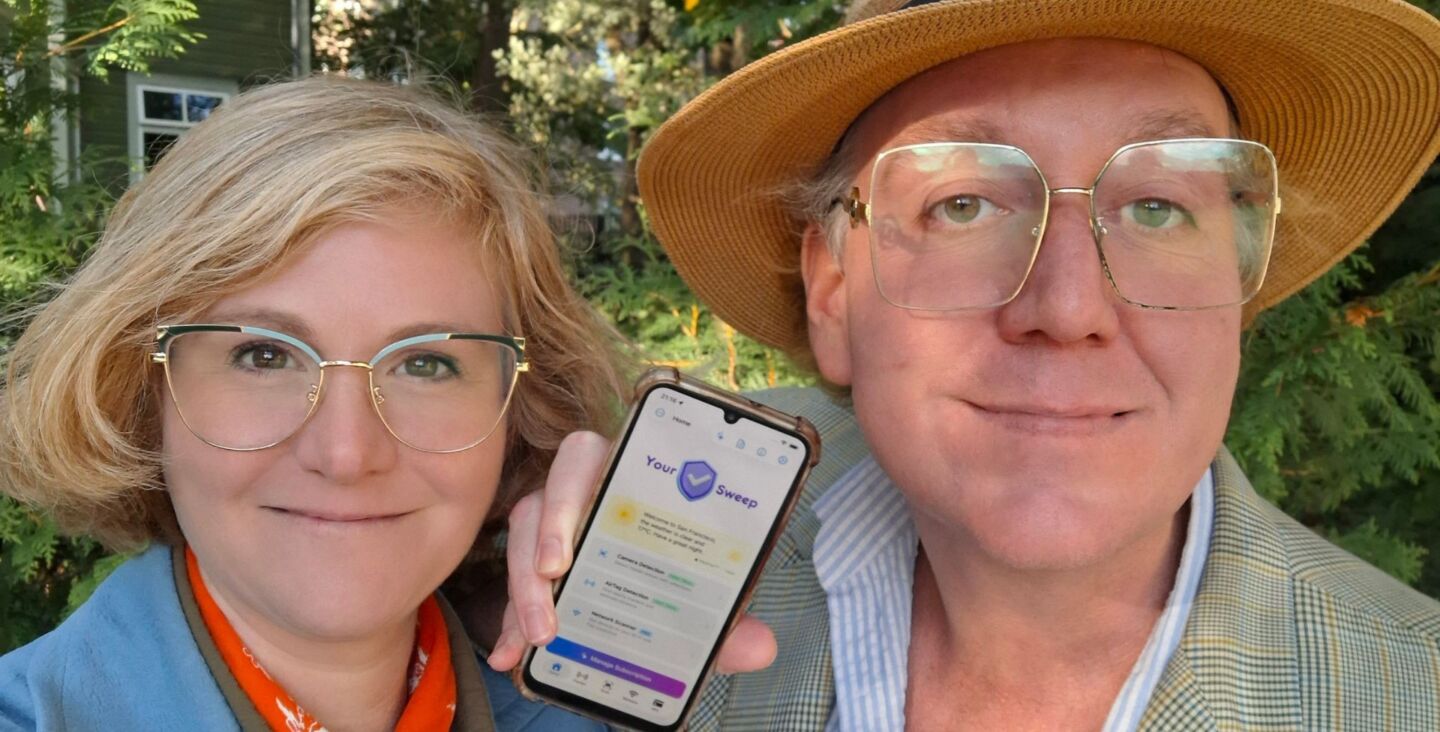
Startup story: Yours Global X Tehnopol Startup Accelerator
Each year, dozens of high-potential startups develop their products and services in Tehnopol Startup Accelerator and its special accelerator programmes. One of the teams currently participating in the Tehnopol Startup Accelerator is...
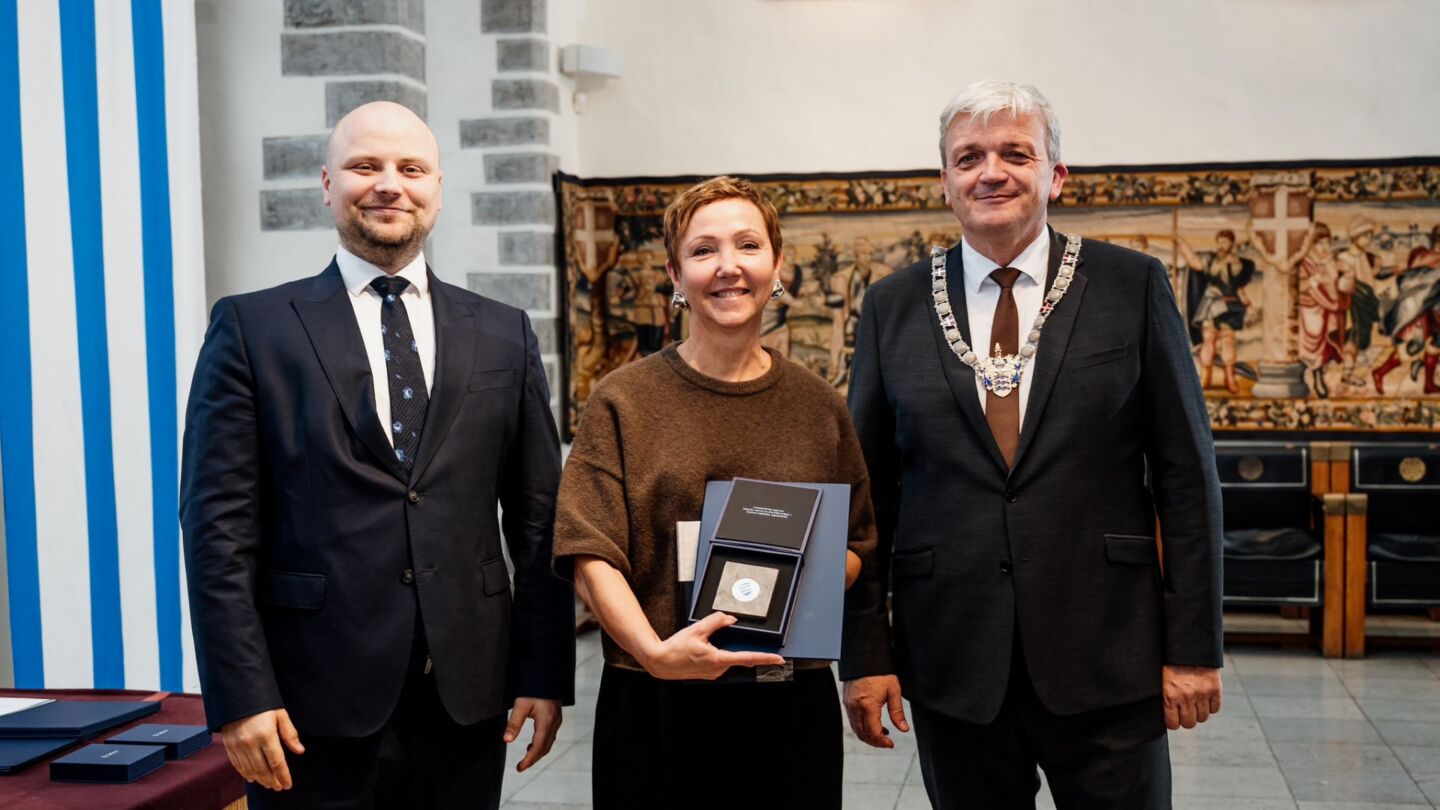
Deep Tech Startup Network Wins Tallinn Entrepreneurship Award
The Deep Tech Startup Network, with Tehnopol as one of the consortium partners, won the title of Research and Development Project of the Year at the Tallinn Entrepreneurship Awards 2026 competition. The...
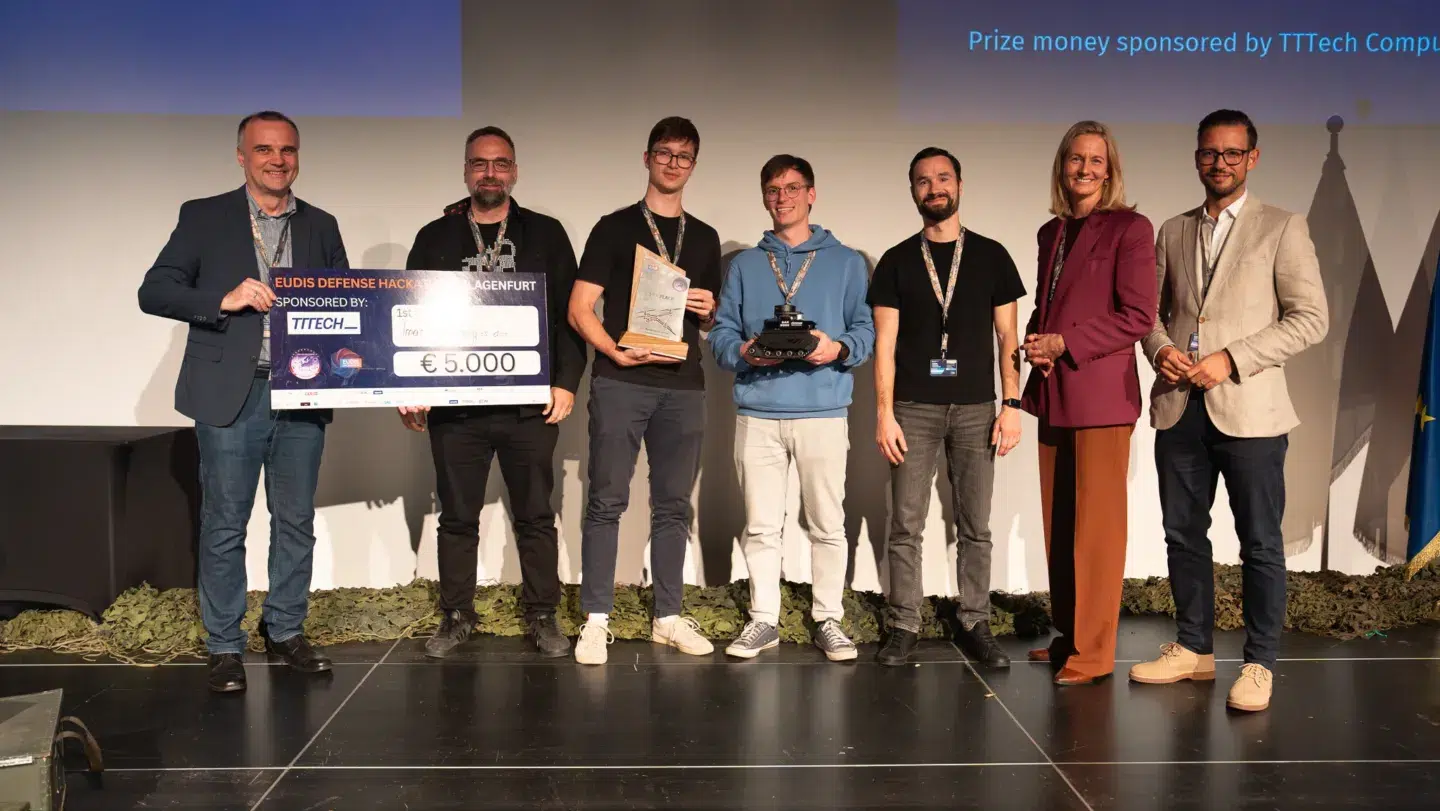
EUDIS Defence Hackathon Autumn 2026: Meet the Innovators Shaping Battlefield Autonomy
From 15 to 17 October 2026, the EUDIS Defence Hackathon brought together innovators at eight locations across Europe to tackle a strategic theme at the heart of Europe’s defence and security priorities:...