
European procurement rewards lower costs, not lower geopolitical risk
The European Union classifies graphite as a critical raw material, while NATO includes it among its 12 defence-critical raw materials. It is used in batteries, defence systems and other strategic technologies, yet Europe remains heavily dependent on imports.
Customers must be prepared to qualify and buy European materials, while investors need credible evidence of demand before financing production at scale.
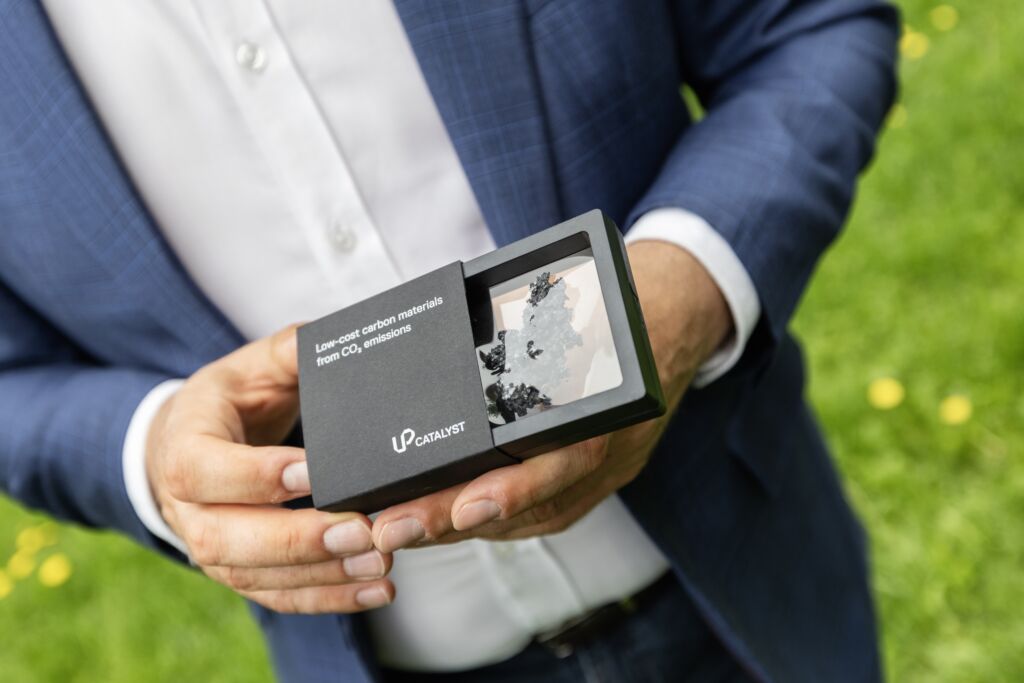
UP Catalyst is an Estonian advanced-materials company producing graphite and carbon nanotubes from industrial carbon dioxide emissions. It is moving from technical validation towards continuous production and planning its first commercial-scale facility.
From technical result to commercial production
On 17 December 2025, UP Catalyst announced that its carbon dioxide-derived graphite had reached battery-grade performance and was moving into validation with battery-cell manufacturers. Their CEO, Rait Maasikas, who will be on stage at Defence Innovation Day, distinguishes between proving that a material performs well and developing a product a customer is prepared to integrate.
“A successful technical result is still a one-sided achievement,” he says. A company or independent research institute can test a material against industry benchmarks, but commercial qualification requires close cooperation with the customer.
“It becomes a close product development partnership where we work alongside the customer, continuously refining the material based on their feedback until it meets their exact requirements.”
Requirements may include specific purity, particle size, shape and performance within the customer’s production process.
UP Catalyst is also working with South Korean company SGC Energy to move from batch production towards a continuously operating process. Maasikas says this would demonstrate that the company can supply consistent volumes at lower cost, giving customers confidence in it as a long-term supplier and investors confidence in the first commercial plant.
“Once you reach continuous production, the conversation changes completely. People stop asking whether the technology works and start asking how quickly you can build the next factory.”
The customer unlocks the factory
On 10 June 2026, UP Catalyst and Oulun Energia announced plans to evaluate a facility in Oulu, Finland, that could produce approximately 20,000 tonnes of battery-grade graphite and carbon nanotubes annually. The facility is targeted to become operational in 2031.
For Maasikas, the decisive factor is not construction but demand. “The biggest challenge is always the customer. Once customers are ready to buy, everything else becomes much easier.”
Long-term offtake agreements, where customers commit in advance to future purchases, can help secure financing. The difficulty is that buyers hesitate to commit before a supplier reaches commercial scale, while investors want signed agreements before financing that scale.
“We need policies that help break this cycle,” Maasikas says.
In UP Catalyst’s case, he does not see construction or permitting as the main obstacle. The company plans to build beside an existing industrial carbon dioxide emitter and use its emissions as raw material, rather than develop a new extraction site.
The Oulu plans also reflect how industrial capacity may be divided across Europe. UP Catalyst was founded in Estonia, its technology originated at the University of Tartu, and its pilot facility is in Maardu. The company plans to retain its headquarters, core team, research and development activities and battery laboratory in Estonia.
Large-scale production, however, requires access to carbon dioxide emissions, competitively priced clean electricity and suitable industrial partners. Maasikas points to Finland’s investment in carbon capture, utilisation and storage, its national battery strategy and its industrial ecosystem.
“I don’t see this as Estonia versus Finland,” he says. “Estonia is where we develop the technology; Finland provides the conditions to manufacture it at scale. Ideally, the two countries become part of the same European value chain.”
Procurement rewards price over resilience
The European Commission’s RESourceEU action plan includes measures to strengthen critical raw material supply, aggregate demand and support long-term offtake agreements. Maasikas argues that European producers still face a basic disadvantage when imported materials are cheaper.
“European procurement teams are usually rewarded for reducing costs, not for reducing geopolitical risk,” he says.
He points to lower production costs, different environmental and labour standards, and long-term government support in competing markets. “Europe would not accept many of the environmental standards under which some of these materials are produced, yet we continue to import them because they are cheaper.”
The European Commission opened the first round of its Raw Materials Mechanism on 13 April 2026, connecting buyers with suppliers, financial institutions and storage providers. Maasikas nevertheless considers incentives to buy European materials a stronger market signal than demand aggregation alone.
“The Raw Materials Mechanism is not a marketplace where buyers simply purchase a standard product,” he says. “Rather, it is a platform that connects suppliers and customers to initiate technical discussions, qualification and often lengthy validation processes.”
Maasikas argues that European materials should be prioritised where possible by companies receiving public funding and in public procurement, including defence projects.
Combined with sustainability criteria, such requirements could give investors clearer evidence of future demand and show how much weight Europe is prepared to give security of supply when the domestic option is more expensive.
A stockpile is not resilience by itself
On 20 May 2026, Reuters reported that tungsten, rare earths and gallium had been shortlisted for an EU critical-minerals stockpile, while graphite remained a possible addition.
“The first question I would ask is what exactly should be stockpiled,” Maasikas says.
Graphite is not a single standardised product. Europe would need to choose between raw unpurified graphite, natural or synthetic graphite, battery-grade graphite and processed forms such as active anode material, each with specifications suited to its intended use.
“Simply having graphite in storage is not enough,” Maasikas says.
Europe would also need the capacity to process graphite into active anode material and manufacture batteries for defence, energy storage and other strategic applications.
“A stockpile only creates resilience if the rest of the value chain is ready to use it.”
For Maasikas, stockpiling can provide a buffer, but it cannot replace domestic production and processing capacity.
When dependence becomes a security risk
NATO identifies graphite as essential to equipment including main battle tanks, corvettes and submarine structures, and warns that supply disruptions could affect defence production.
Maasikas gives the example of synthetic graphite, where producing one tonne requires around two tonnes of petroleum coke. Much of it, he says, is sourced from the Middle East, processed into battery-grade graphite in China and exported to Europe and North America as material or within finished products.
Geopolitical tensions and trade restrictions can disrupt the chain at several points.
“For defence and other strategic industries, this is not simply a procurement issue. It is a question of resilience and security of supply.”
For Maasikas, European policy will only matter if it secures customer commitments, unlocks investment in production and builds the capacity to process and use strategic materials during a disruption.
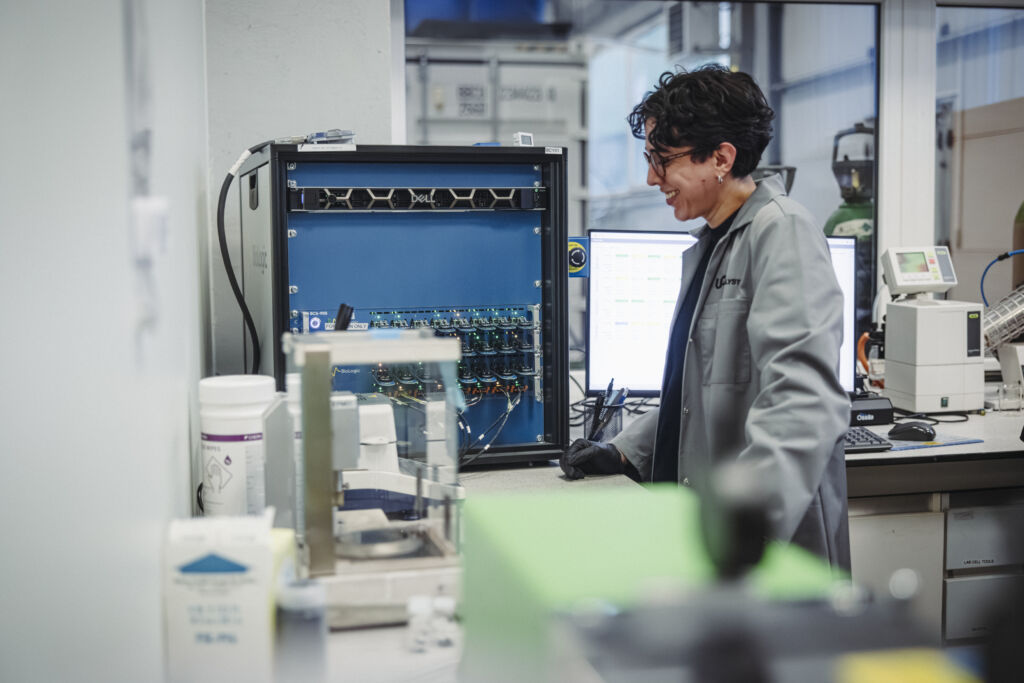
Rait Maasikas, CEO of UP Catalyst, will take part in the panel “What Does Success Look Like in Defence Tech?” at Defence Innovation Day. He will be joined by Martin Karkour, Chief Revenue Officer of Quantum Systems, and Veiko-Vello Palm, COO of Frankenburg Technologies. The discussion will be moderated by journalist Fiona Alston.
Defence Innovation Day takes place on 21 September at Kultuurikatel in Tallinn. It is the first day of Estonian Defence Week. Participation is free of charge, but registration is mandatory and subject to approval.
The event is organised by Tehnopol and the Ministry of Economic Affairs and Communications through the NATO DIANA Estonian Accelerator. It is supported by the Estonian Ministry of Defence. One thematic block is shaped with the input from Sparkup Tartu Science Park.
You might be interested in
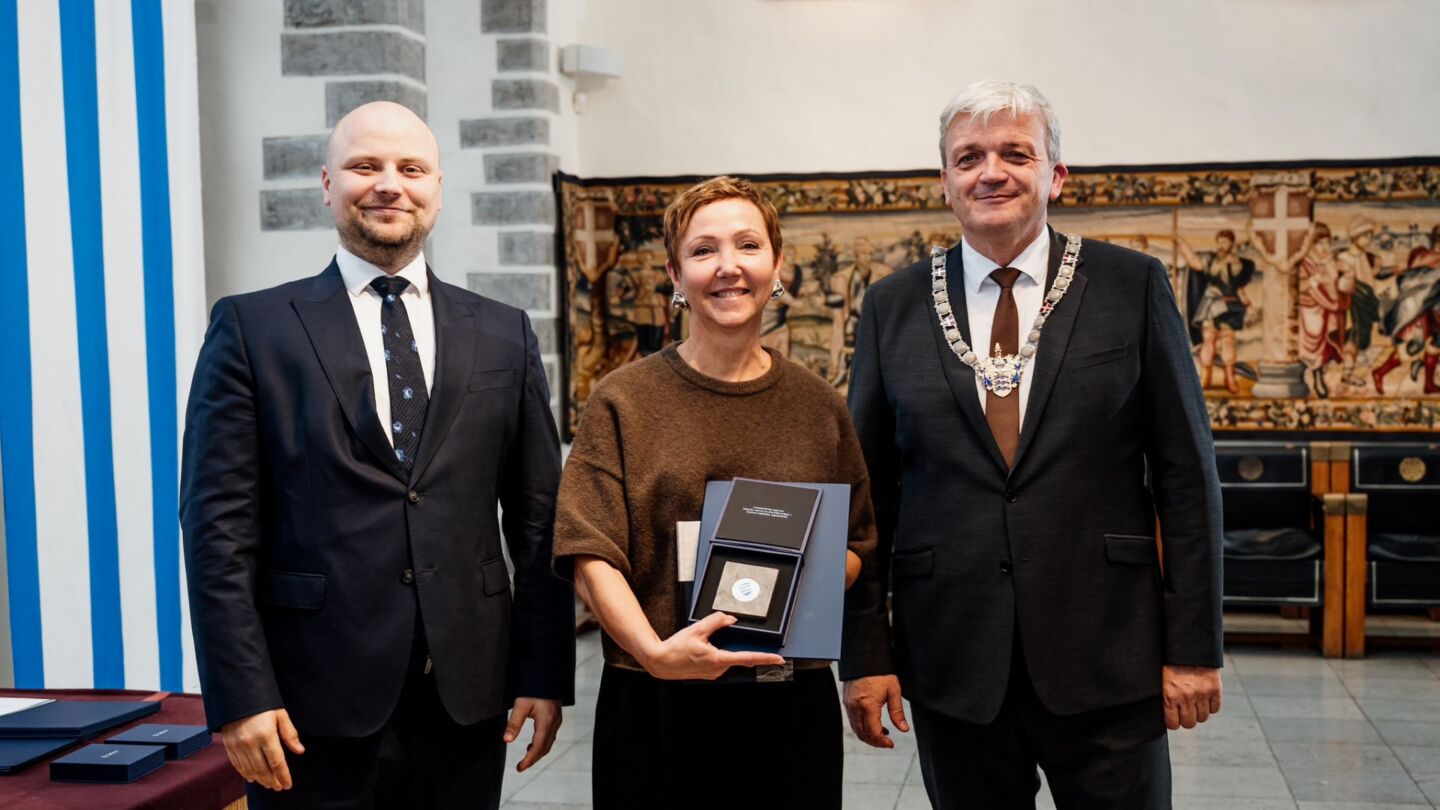
Deep Tech Startup Network Wins Tallinn Entrepreneurship Award
The Deep Tech Startup Network, with Tehnopol as one of the consortium partners, won the title of Research and Development Project of the Year at the Tallinn Entrepreneurship Awards 2026 competition. The...
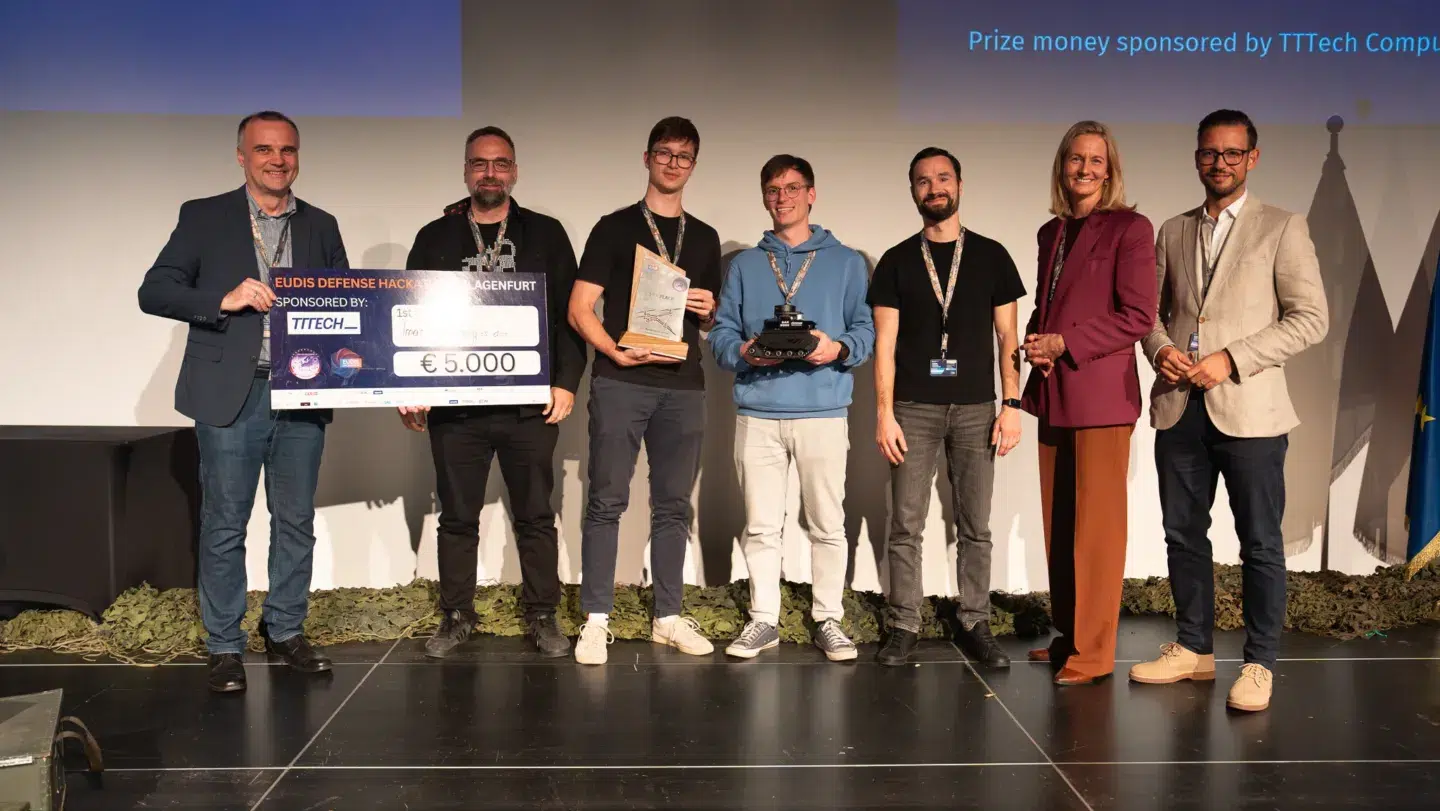
EUDIS Defence Hackathon Autumn 2026: Meet the Innovators Shaping Battlefield Autonomy
From 15 to 17 October 2026, the EUDIS Defence Hackathon brought together innovators at eight locations across Europe to tackle a strategic theme at the heart of Europe’s defence and security priorities:...
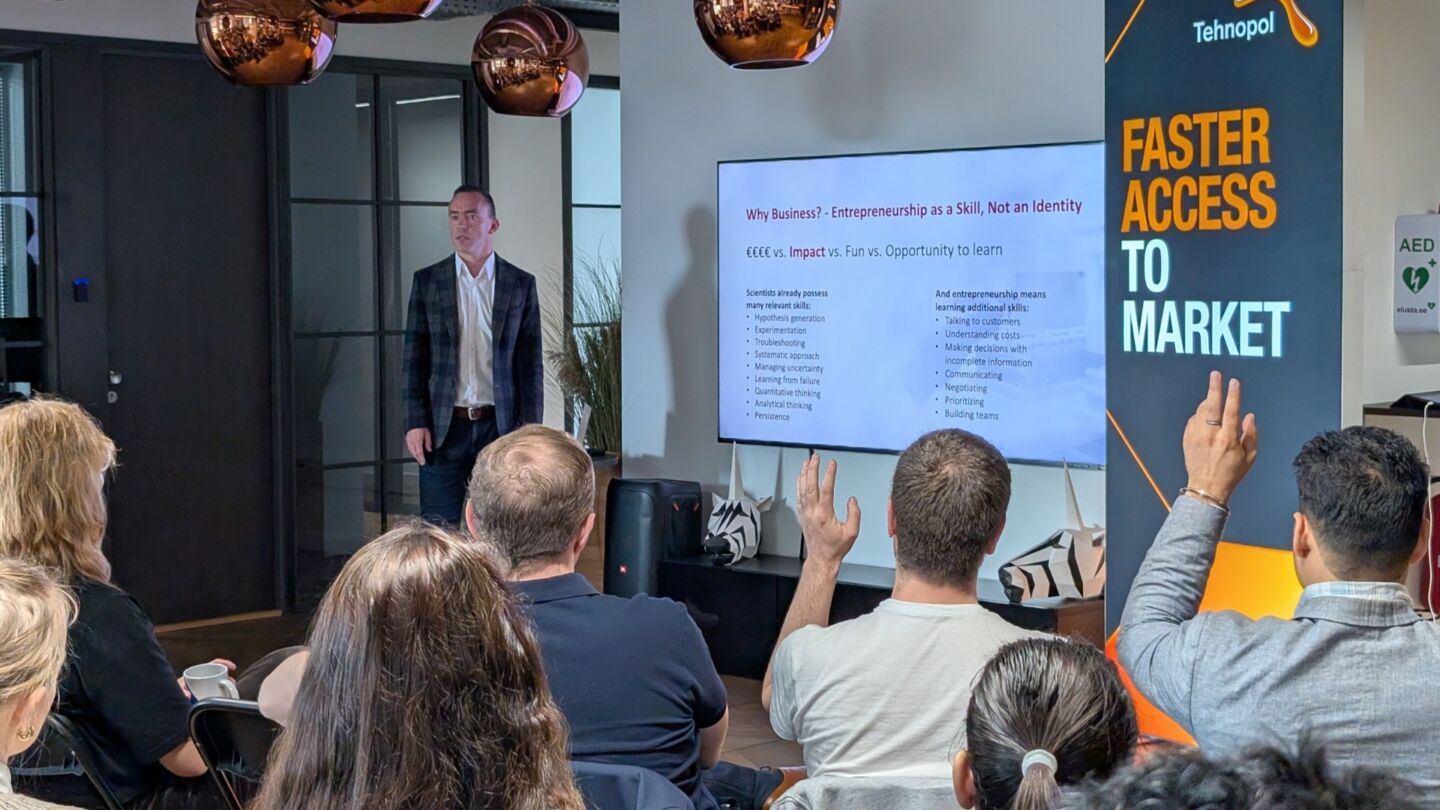
From scientific discovery to real-world impact: What researchers should know about entrepreneurship
Turning a scientific discovery into a successful business requires more than innovative technology. Researchers must learn to identify real-world problems, work with experts from different fields and understand what it takes to...