
Jason Grenfell-Gardner: Estonia’s health innovation goal should be to achieve 65 years lived in good health
When discussing the future of health innovation, it is easy to focus on artificial intelligence, personalised medicine, robotics or new medicines. However, at Tervisekogukonna Kärajad, Jason Grenfell-Gardner, founder of the pharmaceutical company J. Molner, located at Tehnopol Science and Business Park, suggested a different starting point: before listing new technologies, we should first agree on what outcomes we actually want to achieve in healthcare.
In his presentation “HealthTech 2035”, Grenfell-Gardner highlighted that Estonia already has many of the technologies and knowledge needed to diagnose, treat and prevent diseases. The bigger question is whether the healthcare system as a whole is capable of bringing these opportunities to people. According to him, many of Estonia’s healthcare challenges are no longer problems caused by a lack of knowledge or technology, but rather questions of system design and implementation.
Grenfell-Gardner used cardiovascular diseases as an example, where the necessary diagnostic tools and treatment options are already known and available, yet Estonia’s outcomes still lag behind those of the Nordic countries. This demonstrates, in his view, that health innovation cannot be understood only as the creation of a new device, medicine or digital solution. Innovation must also address how the healthcare system identifies patients, prevents risks, organises care and ensures that people consistently receive the support they need.
Based on this, he proposed looking at Estonia itself as a health technology. Just as Estonia has previously built solutions as a digital society, the healthcare system as a whole could also be deliberately designed to generate more healthy life years for its population.
A central goal proposed by Grenfell-Gardner was 65 healthy life years. He emphasised that the success of the system should be measured less by the number of hospital beds, visits, pilot projects or applications created, and more by whether the number of healthy life years among Estonians is actually increasing. Such a goal, he argued, should also have a clear owner with a sufficiently long mandate, budget and the ability to work across different government sectors.
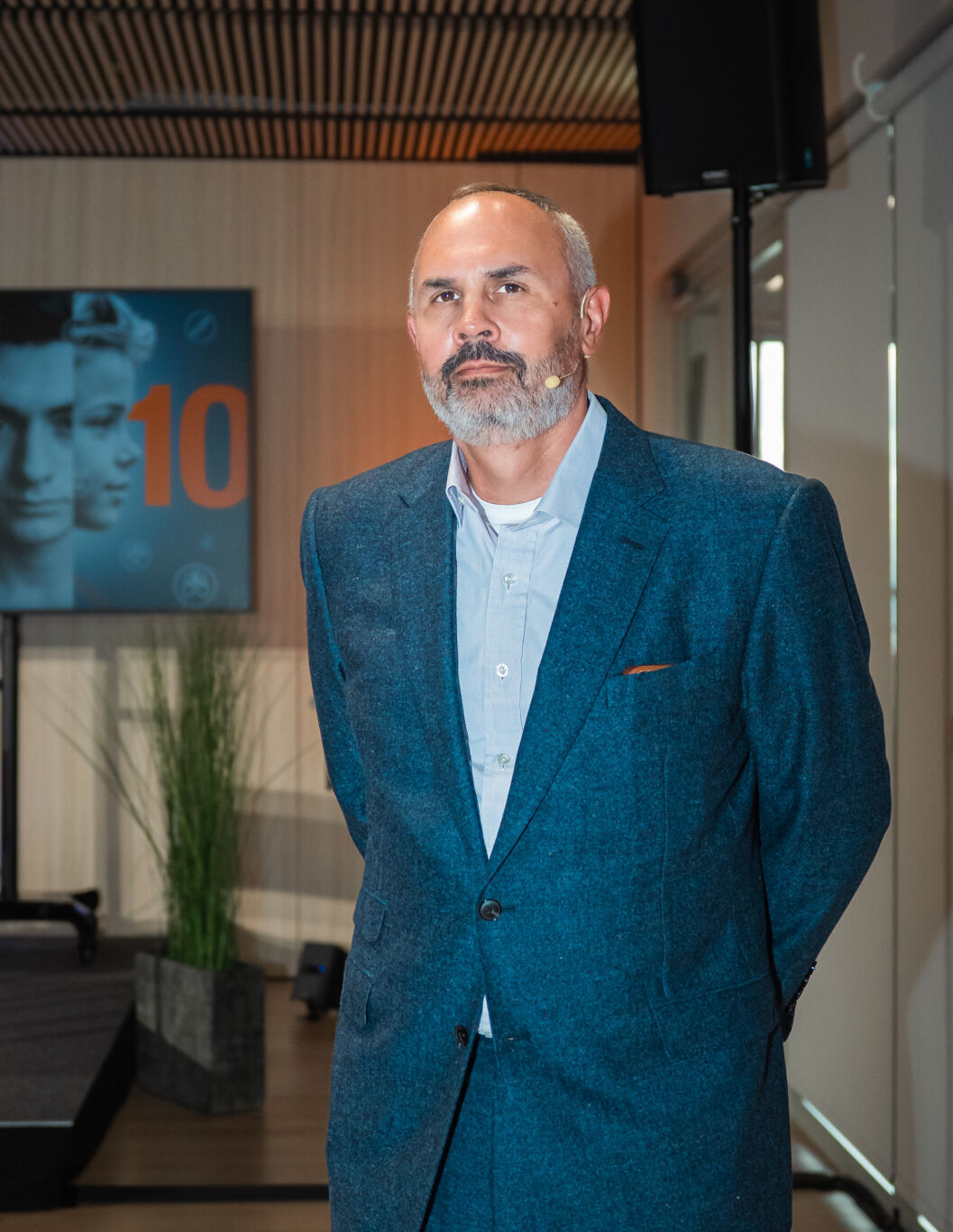
As a second proposal, Grenfell-Gardner highlighted the need to create a true test environment for the healthcare system. This would mean the ability to test not only new technologies, but also funding models, procurement processes, workflows and the roles of healthcare professionals. If a change proves effective, it should be scaled; if not, it should be stopped and the learnings used to make better decisions. In his view, Estonia needs fewer new strategy documents and more systems that enable controlled experimentation and evidence-based decision-making.
As one practical example, Grenfell-Gardner introduced the concept of a “third door” in healthcare. Today, people often face two options: waiting for a family doctor appointment or turning to emergency care. Between these two pathways, there could be an additional service model designed to address urgent but non-emergency health concerns, reducing pressure on both family doctors and emergency departments.
He also emphasised the importance of healthcare system resilience. When it comes to medicines and other critical health products, decisions should not be driven by price alone – actual availability and supply security are equally important. This is one example of how the incentives built into a system directly influence the outcomes patients ultimately experience.
One of the central messages of the presentation was that the healthcare system is not “broken” by accident. A system behaves according to the rules, incentives and goals it has been given. If the outcomes no longer meet society’s needs, we must be willing to redesign the system itself.
Watch the recording of the presentation here.
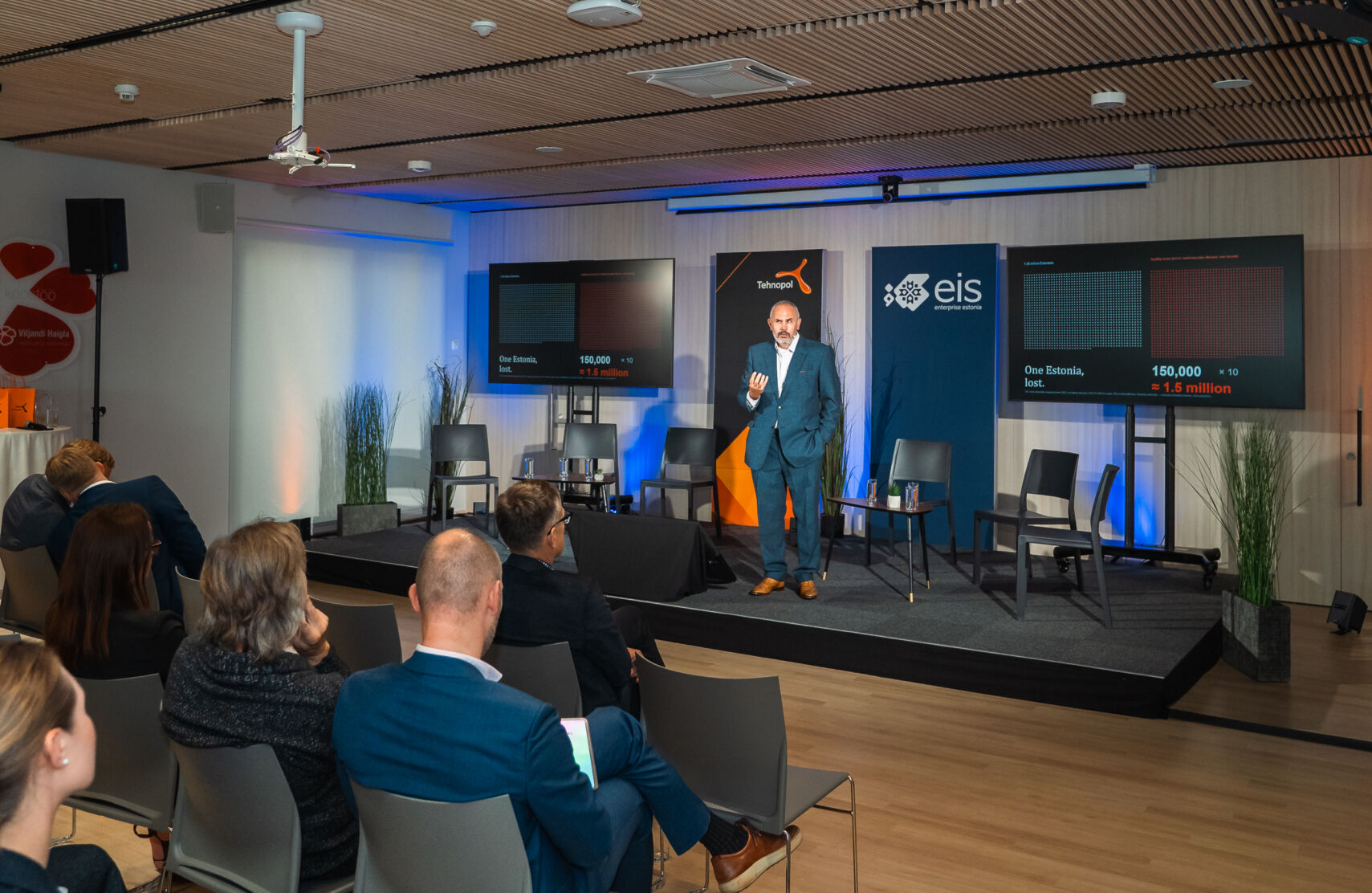
Photo: Jason Grenfell-Gardner
Tervisekogukonna Kärajad celebrated their 10th anniversary this year, with the jubilee edition taking place on 10 September at Viljandi Hospital and Health Centre Tervikum.
Over the past decade, Kärajad has brought together stakeholders from healthcare, science, business and the public sector to discuss the most important topics shaping the field and to collectively explore where Estonian health innovation is heading. In its anniversary year, the event looked back at what the health technology landscape was like in 2016, the ambitions and challenges we have experienced along the way, and whether today’s choices will help us reach our goals for 2035.
The event was supported by the Estonian Business and Innovation Agency (EIS).
You might be interested in

Circle Tech helps companies manage the lifecycle of IT devices more efficiently
Based at the Tehnopol campus, Circle Tech helps companies and organisations manage the entire lifecycle of IT and smart devices – from selecting the right equipment to replacing it and giving it...
From scientific discovery to real-world impact: What researchers should know about entrepreneurship
Turning a scientific discovery into a successful business requires more than innovative technology. Researchers must learn to identify real-world problems, work with experts from different fields and understand what it takes to...
New digital support platform for cancer patients being tested in Saaremaa
A pilot project has been launched in Saaremaa to develop and test a digital support environment for cancer patients. The aim of the solution is to bring together information about services supporting...