
Defence Innovation Day 2026: from frontline experience to capability at scale
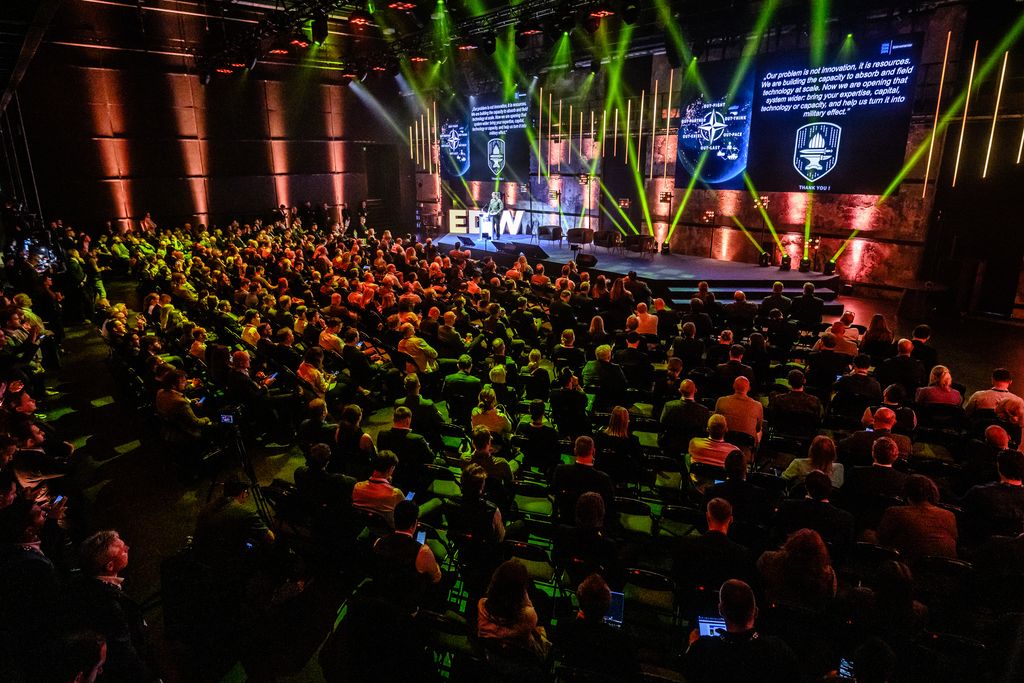
Defence Innovation Day brought nearly 900 people from 42 countries to Kultuurikatel on 21 September. With 15 exhibitors and more than 30 speakers taking the stage in Tallinn, discussions approached the same practical challenge from very different directions: how to shorten the distance between an operational need and a capability that can be fielded, integrated and used in practice.
Organised by Tehnopol, the second Defence Innovation Day opened Estonian Defence Week. The audience brought together military and security end users, startups and established defence companies, investors, researchers, public-sector organisations and specialists working with crisis preparedness and critical infrastructure.
Siim Sukles, Undersecretary for Defence Industry and Innovation at the Estonian Ministry of Defence, opened the day by speaking about Estonia’s commitment to defence innovation and the need to prepare now for future conflicts. Anne-Liisa Elbrecht, Head of Tehnopol Accelerator and the NATO DIANA Estonian Accelerator, followed by explaining why Tehnopol had brought the event back for a second year and why stronger connections between companies, end users, public institutions, investors and international partners matter in the current security environment.
Successful testing is only the beginning
Major Ivo Peets, Commander of the Force Transformation Command of the Estonian Defence Forces, focused his keynote on what happens when a promising technology reaches a military organisation. His presentation covered the force’s ability to absorb change through people, training, integration, logistics, sustainment and clear ownership of decisions.
One example came from field testing. Peets described companies and their products spending more than two weeks with specific military units, giving soldiers and developers time to test concepts together, improve the technology and refine the military requirement based on actual use. That kind of access generates evidence about how a system fits into operations, what needs to change around it and whether the original requirement accurately reflects the operational problem.
Peets also addressed the differences between national defence acquisition systems. Companies expanding internationally need to understand where responsibility for military requirements, resources and purchasing sits in each country. Estonia separates those roles between the Ministry of Defence, the Estonian Defence Forces and the Estonian Centre for Defence Investments. The Defence Forces define military needs and validate military utility, while procurement, supplier selection and contracting remain separate decisions.
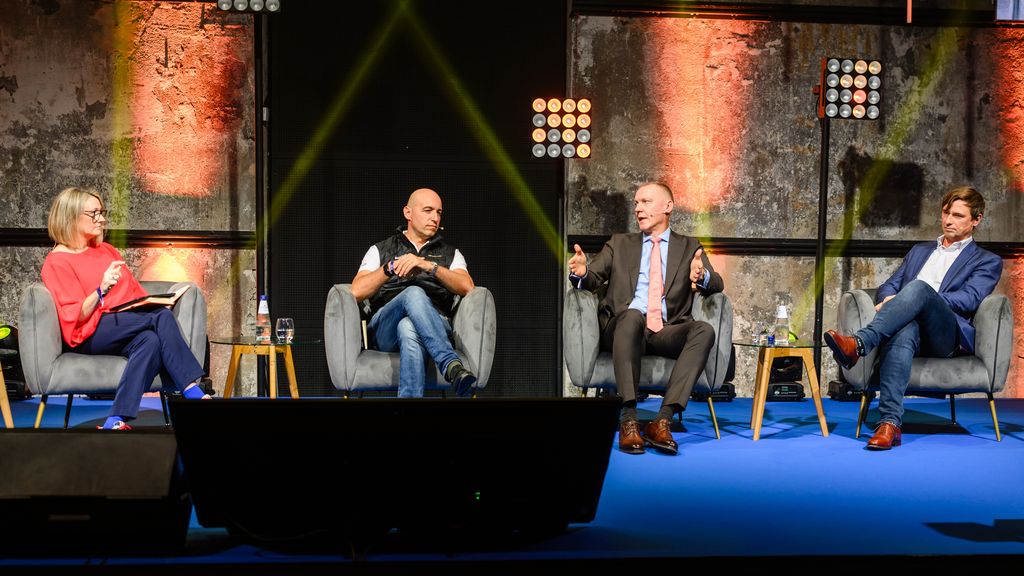
The route from experimentation to deployment also featured in the panel Dual-Use in Action: From Civilian Innovation to Defence Capability. NATO DIANA Regional Director Kadri Tammai argued that Europe already has capital, political willingness and a growing number of companies working on defence, while the pathway from successful experimentation into larger procurement and deployment is still developing.
Tammai argued that the practical value of a technology matters more than whether it is described as dual-use, defence-first or defence-only:
“Technology, if it solves the problem, it is relevant.”
Kelluu CEO Janne Hietala brought a company example into the discussion. Kelluu began with persistent aerial autonomy developed for civilian applications, moved through NATO DIANA, attracted investment led by the NATO Innovation Fund and adapted its technology for surveillance.
Hietala described Kelluu’s participation in repeated NATO Allied exercises, which gave the team regular exposure to operational users and helped shape the technology around real requirements.
Jaak Kalja, Head of Technology Innovation at the Estonian Division, brought in the military user perspective and stressed the importance of whether a technology helps soldiers perform the mission.
A second panel, What Does Success Look Like in Defence Tech?, brought together Rait Maasikas, CEO of UP Catalyst, Veiko-Vello Palm of Frankenburg Technologies and Martin Karkour of Quantum Systems. The discussion looked at what success in defence technology requires as companies move from early development towards wider adoption and scale.
Ukraine has shortened the development cycle
Martin Jõesaar, Programme Officer at the European Commission and lead of the EU Defence Innovation Office in Kyiv, mapped the route from frontline demand to fielded capability in his keynote Innovation Wins Wars, But Only If It Reaches the Battlefield.
His presentation followed the chain from frontline need through technical requirements, development, testing, validation, production and contracts. Each stage affects how quickly a capability can reach operational use.
Jõesaar asked European forces to look at experience in concrete terms. How many FPV drones have units actually used during the previous six months? How many fibre-optic drones or interceptors? These questions were intended to show the difference between having access to a technology and having operational experience with it.
During the Q&A, he described how Ukrainian companies can send products to frontline users, receive feedback and return improved versions quickly. That process depends on developers and military users working closely enough for problems identified in the field to move rapidly back into development. His advice to very early-stage companies was to begin with national defence institutions and national innovation programmes. Those organisations can help establish whether an operational user needs the capability before companies move towards larger European funding instruments.
Asked where early-stage companies should start looking for their first military users, Jõesaar replied:
“You should look at the uniforms.”
His presentation also covered European instruments for later development and scaling, including BraveTechEU, the planned AGILE programme, EDIP and expanded European Innovation Council instruments for dual-use and defence technologies.
The Ukraine-focused panel that followed addressed the realities of entering the Ukrainian defence ecosystem. Oleksii Havrysh, CEO of ARMOR SYSTEMS, Martin Appo, CTO of Ark Robotics, and a representative of the Special Operations Forces of the Armed Forces of Ukraine joined moderator Anastasiia Ostrovska.
Appo described establishing operations in Ukraine and stressed the importance of hiring locally. A permanent presence can provide closer relationships, stronger knowledge of the operating environment and faster access to the problems that technology has to solve in practice. For companies entering the Ukrainian market, that means building local knowledge and capacity rather than relying only on occasional trials or visits.
Operational feedback is becoming a competitive advantage
TEKEVER co-founder and CEO Ricardo Mendes presented the development of the company’s autonomous systems across civilian surveillance and defence missions. TEKEVER reported more than 50,000 operational flight hours in Ukraine, thousands of missions and more than 100 incremental product evolutions driven by frontline feedback since 2022.
The company is now applying those lessons in markets operating under peacetime regulatory, industrial and procurement systems. TEKEVER’s approach combines rapid iteration with manufacturing capacity, regulatory compliance, sovereign capability and expansion across national markets.
Mendes also highlighted TEKEVER’s five-year £400 million investment programme in the United Kingdom, focused on AI, autonomy and sovereign defence capability. The plan includes more than 1,000 highly skilled jobs and reflects the industrial scale involved when operationally tested technology moves into wider production.
Mark Miller of UFORCE presented a multi-domain ecosystem spanning maritime, aerial and ground unmanned systems, counter-UAS interceptors and its SICH command-and-control platform. UFORCE reported more than 250,000 combat missions.
Miller also described Ukraine’s battlefield points system, where operational performance generates data on how systems perform in real conditions. Technologies producing results can spread to additional units, creating more evidence and another development cycle. The model has implications for training and procurement as well as product development. Exercises need to provide realistic conditions, industry needs sustained access to military users and organisations need processes that can respond when operational evidence shows that a system, concept or requirement should change.
Speed depends heavily on the distance between the operational problem and the people able to change the solution. Shorter feedback loops allow lessons from use to return to development more quickly.
Resilience depends on connected systems
Border security brought a different operational environment into the discussion. In Security at our doorstep: tech to protect our borders from Andalusia to Lapland, Egert Belitšev, Director General of the Estonian Police and Border Guard Board, Darek Saunders of Frontex, Air Brigadier General Jean-Luc Daroux of DELAIR and Cybernetica CEO Oliver Väärtnõu discussed how border organisations can use technology more effectively.
One point from the discussion concerned the amount of information already available. Cameras, radars, drones and other sensors can generate vast quantities of data, while border guards still need a coherent operational picture that helps them identify what requires attention and what action to take.
That places image processing, data fusion and decision support alongside the physical sensors as central parts of modern border protection. The operational value comes from turning multiple information streams into something usable.
A roundtable co-curated by Sparkup Tartu Science Park connected another set of capabilities. Eyes Above, Machines Below brought together John Kent of ICEYE, Rubén Gil Fontán of Vig-Sec Drone and Lt Col Tõnis Pärn, Commander of the Air Surveillance Wing of the Estonian Air Force.
The discussion connected satellite-enabled situational awareness, unmanned systems and operational air-surveillance requirements. It showed how different technologies and data sources can contribute to the same operational picture.
Pitches, booths and different capability gaps
Four NATO DIANA companies brought that breadth onto the main stage. SkyFi, DATAMBIT, IS-Wireless and Spacedrip each had three minutes to pitch, followed by questions from Gabrielle Dunn of In-Q-Tel, Hugo Urbla of the Estonian Defence Forces’ Force Transformation Command and Air Brigadier General Jean-Luc Daroux of DELAIR.
Three of the four companies had previously been accelerated in Estonia by Tehnopol and Sparkup Tartu Science Park. Their solutions covered geospatial intelligence, information integrity, resilient communications and water logistics.
Fifteen companies and organisations took part in the exhibition area at Kultuurikatel: Arx Arcenda, Corvus Intelligence, DATAMBIT, DoD Solution, the European Innovation Council, Glazer Technologies, GPO Drones, IS-Wireless, Praesidium Defence, SkyFi, Skypiercer Systems, Sonic Dynamics, Thistle, Vidar Systems and Zmiyar.
Their work ranged from GPS-independent UAV navigation, autonomous targeting and counter-FPV systems to C2 and SIGINT software, private 5G and 6G, satellite intelligence, passive acoustic detection and trusted autonomy for unmanned ground systems.
The exhibition gave participants the opportunity to continue conversations away from the stage and explore technologies from across the defence and dual-use ecosystem. Hardware, software, intelligence, communications, logistics and investment were all represented in the same space.
From a promising solution to usable capability
Across the day, repeated examples showed the value of sustained contact between developers, operational users and institutions. That contact can improve technology while also revealing changes needed in requirements, training, logistics, interfaces, procurement and production.
This is also where Tehnopol’s role continues after the conference. Through the NATO DIANA Estonian Accelerator, Defence Business Lab, EUDIS-related activities and acceleration work across cybersecurity, AI and deep tech, Tehnopol creates routes for companies to continue working with end users, public institutions, investors and international partners.
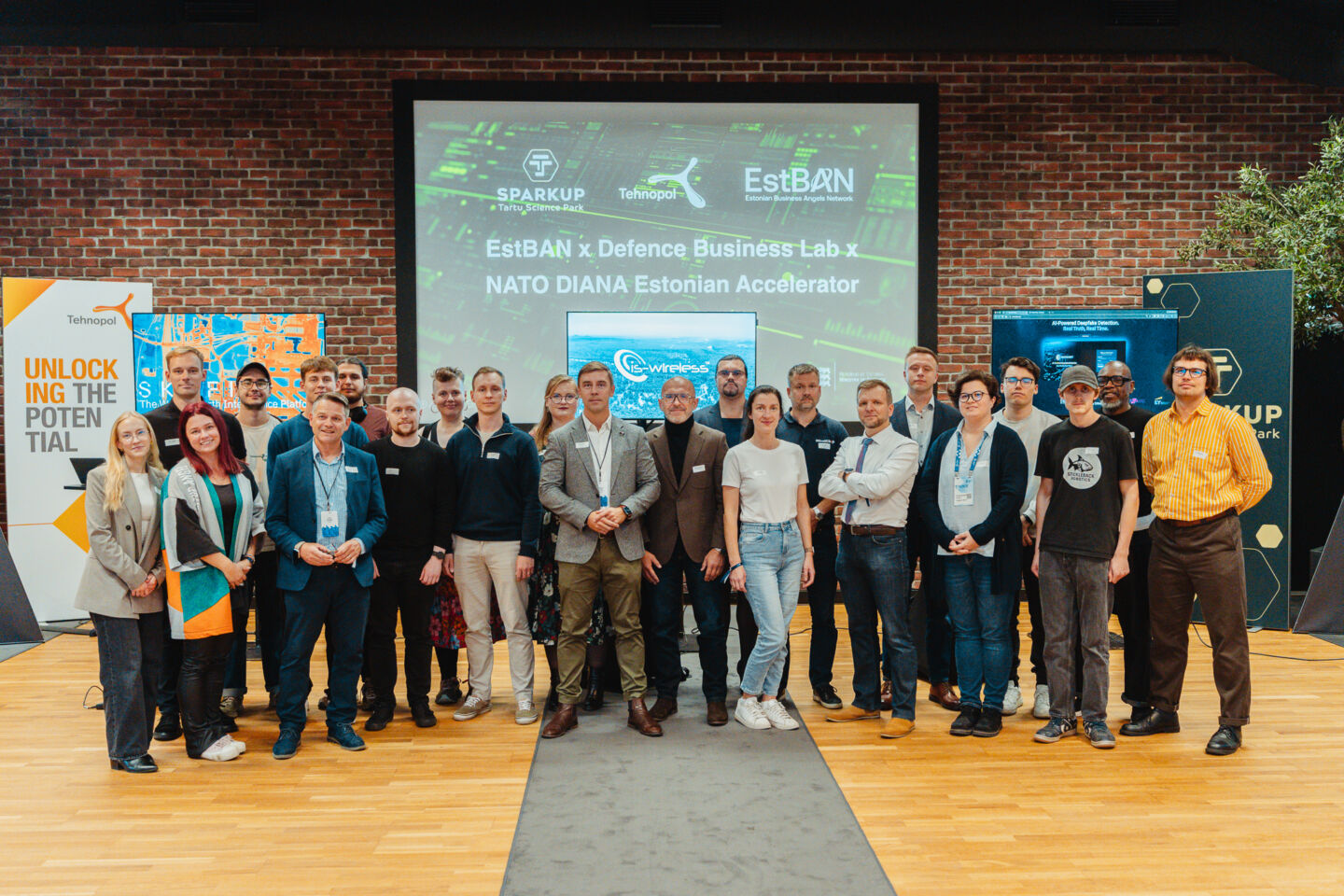
Defence Innovation Day was organised by Tehnopol and the Ministry of Economic Affairs and Communications through the NATO DIANA Estonian Accelerator. It was supported by the Estonian Ministry of Defence. One thematic block was developed with input from Sparkup Tartu Science Park.
For the nearly 900 people who came to Kultuurikatel, the event now has a second life outside the conference hall. The value of the conversations started in Tallinn will be measured by what follows from them: tests, partnerships, investment decisions, procurement routes and capabilities that reach the people expected to use them.
All photos by Eiko Lainjärv.
You might be interested in
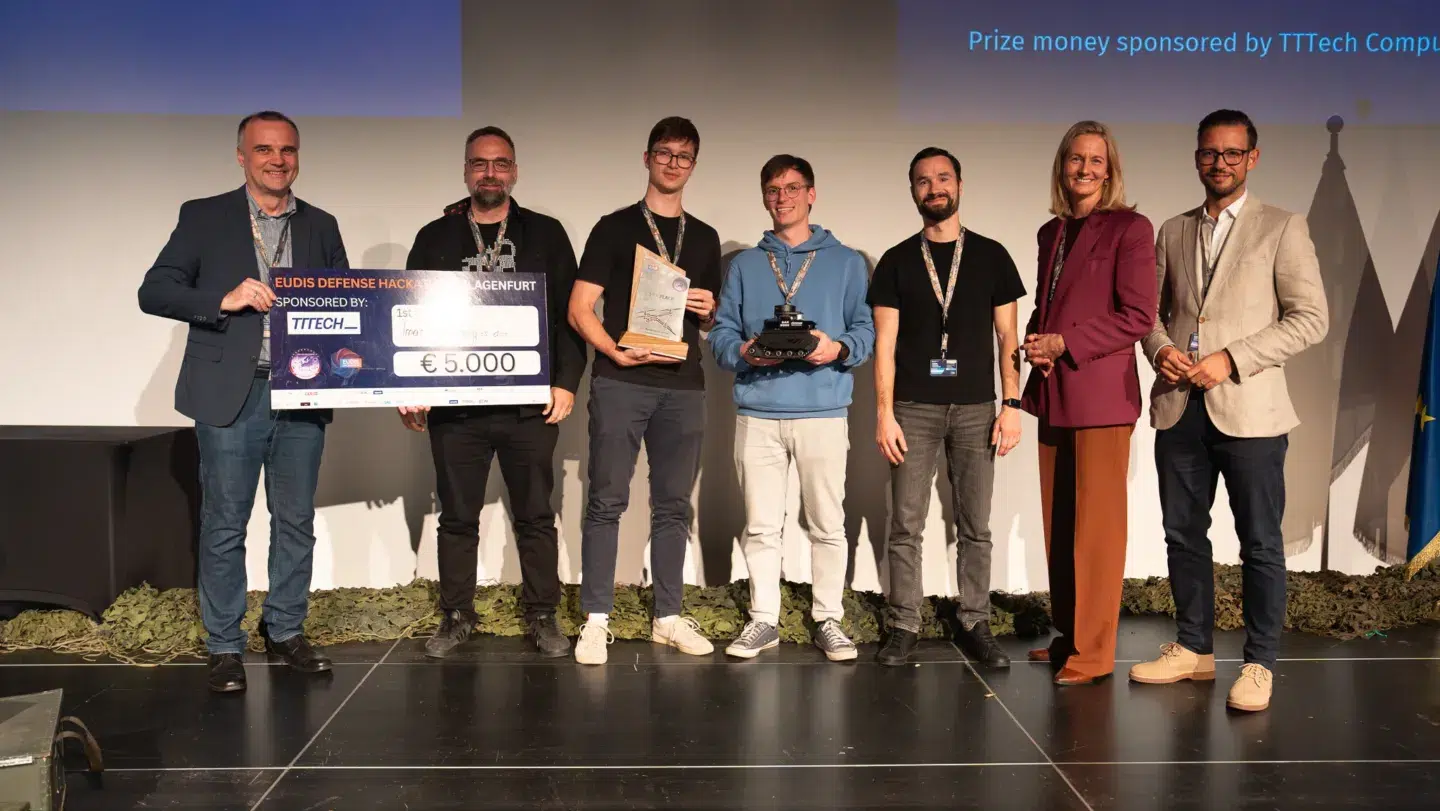
EUDIS Defence Hackathon Autumn 2026: Meet the Innovators Shaping Battlefield Autonomy
From 15 to 17 October 2026, the EUDIS Defence Hackathon brought together innovators at eight locations across Europe to tackle a strategic theme at the heart of Europe’s defence and security priorities:...
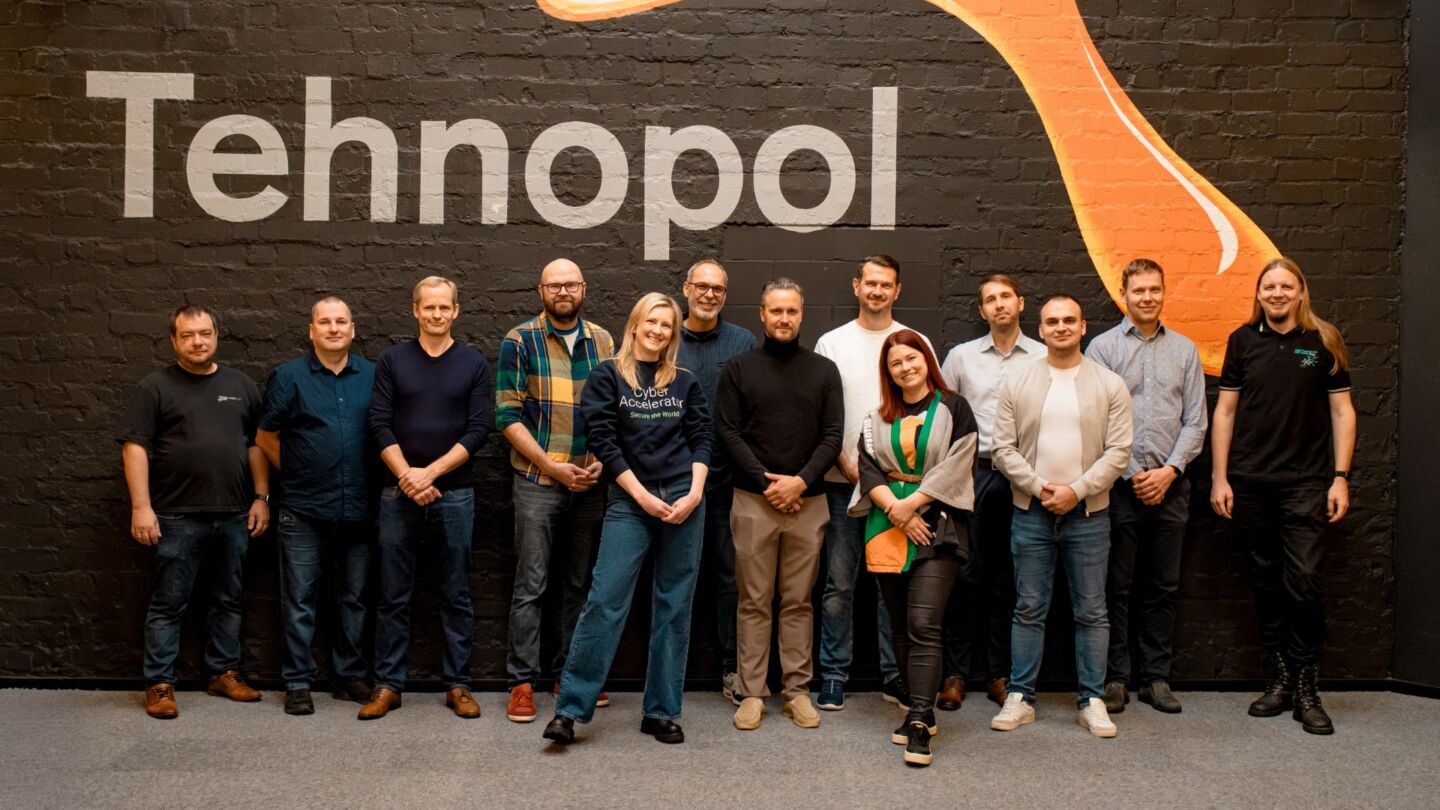
Seven companies selected for Cyber Accelerator to develop new solutions for preventing cyber threats
Tehnopol Accelerator, in cooperation with the Estonian Information System Authority (RIA) and the European Cybersecurity Competence Centre (ECCC), runs the Cyber Accelerator, which supports cybersecurity startups in developing and bringing new products...
From Defence Business Lab to NATO DIANA: one stage, different steps in the defence innovation journey
On 24 September, 13 defence and dual-use companies presented their solutions at the Defence Business Lab Demo Day: ten startups completing the three-month pre-accelerator and 3 alumni of the NATO DIANA Estonian...