


30.01.2026
NATO DIANA Estonian Accelerator Batch #3 Begins with a Focus on Operational Readiness
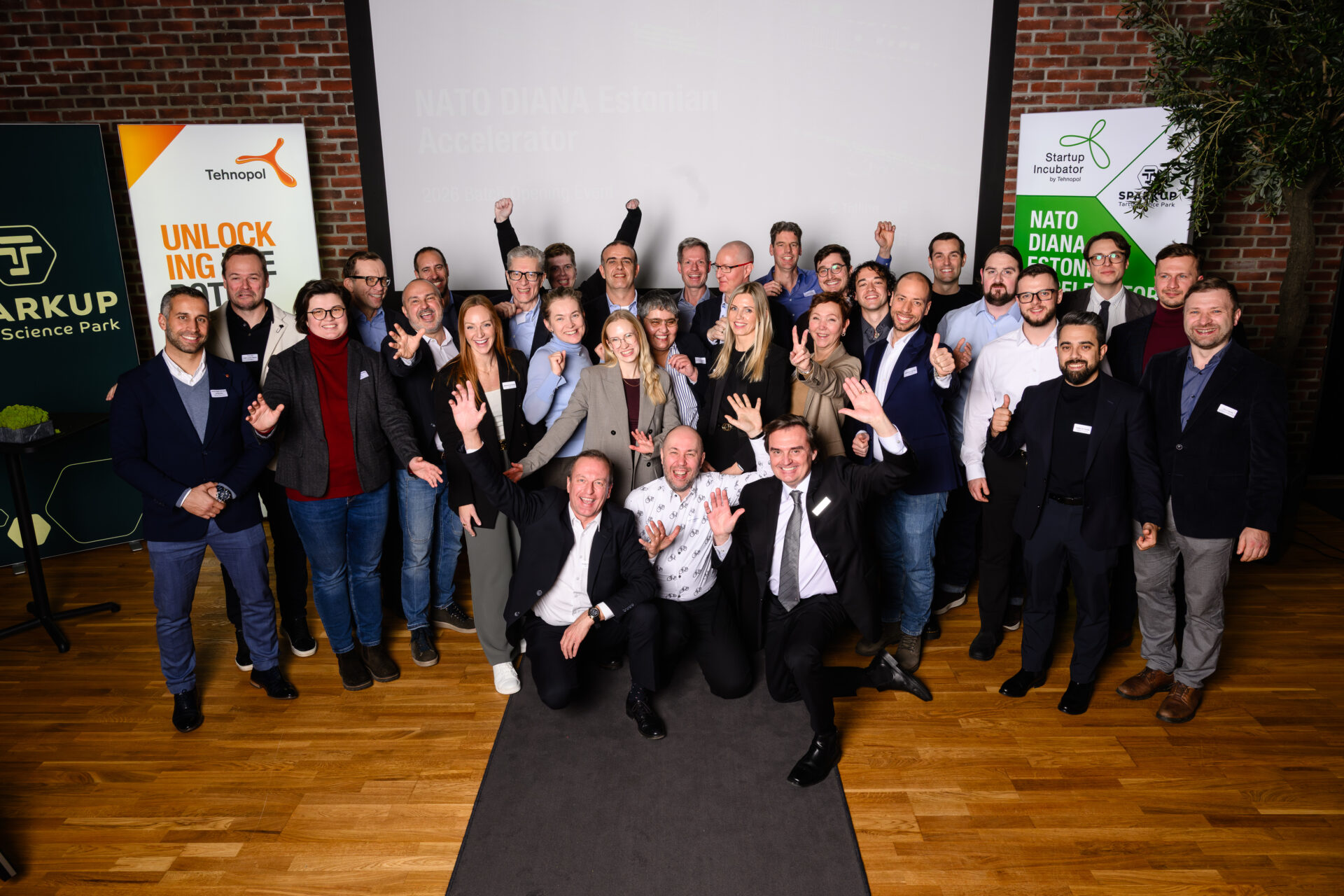
The first onsite of the NATO DIANA Estonian Accelerator Batch #3 brought the 2026 cohort to Estonia for an intensive week of shared work, discussion and engagement with the defence and security ecosystem. Twelve selected companies from 10 NATO countries took part in a programme spanning Narva and Tallinn, combining strategic discussion with direct exposure to operational contexts. Throughout the week, founders were encouraged to think practically about end users, deployment conditions and the institutional frameworks their solutions will need to work within.
Geopolitical Awareness
Part of the onsite took place in Narva, hosted at the Estonian Academy of Security Sciences. Working in a border-region setting naturally shaped conversations around security and resilience. Discussions on surveillance, situational awareness and response capability were grounded in place, prompting teams to consider how geography, infrastructure and responsibility influence operational decision-making.
Workshops in Narva were led by Remo Ojaste and Villiko Nurmoja, focusing on team dynamics, leadership and defence and dual-use business considerations. These sessions encouraged teams to reflect on how decisions are made under pressure and what this means when operating in complex, security-driven environments.
The cohort also engaged with the Police and Border Guard Board, including a visit to the Estonian–Russian border. These exchanges offered a closer look at how border monitoring and surveillance function in practice, from environmental and technical considerations to procedural and regulatory realities. For many teams, this helped clarify where new technologies can realistically support existing capabilities.


The programme then continued in Tallinn at Tehnopol, where the focus shifted towards structured work and engagement with the wider defence and innovation ecosystem. We started off with a workshop by Magnus Valdemar Saar.
Alongside this, startups met with expert mentors, pitching their solutions, and receiving direct feedback on problem framing, operational relevance, and integration potential. These conversations helped teams sharpen their positioning.
Engagement with the wider defence and innovation ecosystem continued through a reverse pitch session, where six representatives spoke directly with the cohort about their organisations’ roles, priorities and expectations. Startups heard from Martin Hanson at CR14, Henri Schasmin from TalTech, Tiaana Kalda representing the Estonian Centre for Defence Investment, Raimond Kaljulaid from the Estonian Parliament, Siim Saat from the Estonian Defence Forces and Urmas Ruuto from NATO CCDCOE. The session gave teams a clearer sense of how different stakeholders approach innovation and where meaningful cooperation could develop over time.
Governmental Support

The week concluded with the opening event of the NATO DIANA Estonian Accelerator 2026 batch at Tehnopol. Startups presented their solutions to an audience that included Minister of Defence, Hanno Pevkur, and Minister of Foreign Affairs, Margus Tsahkna. Their fellow policymakers, military end users, investors, mentors and ecosystem partners, witnessed the teams placing their work within NATO’s broader innovation priorities and highlighting the role of dual-use technologies in strengthening security and resilience.
Further expertise was shared on stage by Kristjan Järvan, Deputy Mayor of Tallinn; Ahti Kuningas, Secretary General of the Ministry of Economic Affairs and Communications; Rune Linding, NATO DIANA Challenge Manager; Kaimo Kuusk, Secretary General of the Ministry of Defence; and Kadi Silde, Director of European Engagement at Helsing.

The 2026 programme represents the third batch of the NATO DIANA Estonian Accelerator. From 3,680 applications submitted across NATO countries, 150 companies were selected overall. The cohort in Estonia addresses challenges ranging from maritime operations to data-assisted decision-making.
The Estonian cohort includes Vig-Sec Drone S.L., Unplugged, CulturePulse, Blue Team Intelligence B.V., Quantum Quest, MAPS Messaging BV, Eye2Drive, Datifex, Inc., SkyFi, Hightek S.r.l., DATAMBIT and Aereus.

Next up, the teams will be back in Estonia in March, this time for a week full of events in Tartu.
The NATO DIANA Estonian accelerator is led by Tehnopol Startup Incubator together with Sparkup Tartu Science Park, supported by the Ministry of Economic Affairs and Communications, Ministry of Foreign Affairs, Ministry of Defence and the City of Tallinn.
Photos: Eiko Lainjärv, Visualency, and others