

19.03.2026
Smarter solutions are needed to support living at home
The article was published in Sotsiaaltöö magazine (March 2026).
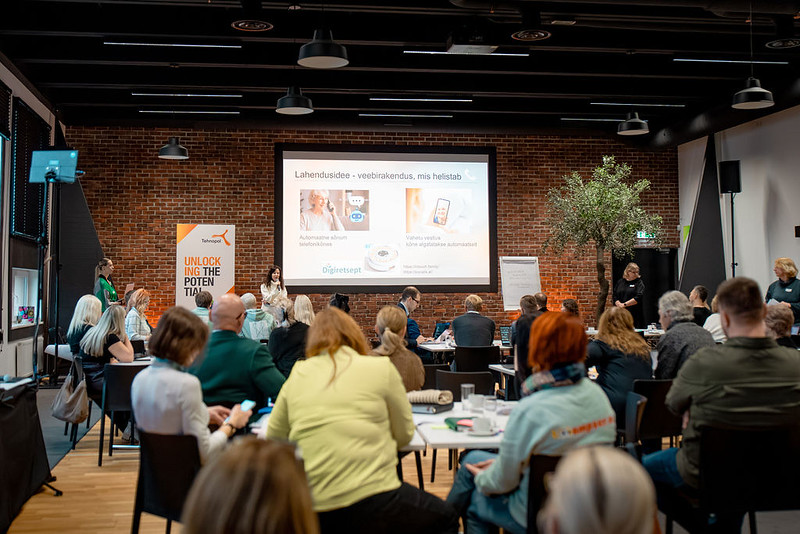
One of the main goals of the welfare technologies development program commissioned by the Ministry of Social Affairs and implemented in 2026–2029 is to bring technological solutions into the everyday lives of people who need support in a way that genuinely improves the accessibility and quality of services. Program Manager Helen Staak, who also serves as Head of HealthTech at Tehnopol, explains the approach and expectations behind the program.
Estonia’s social welfare system is under increasing pressure. The population is ageing, support needs are growing, and the caregiving burden is rising. At the same time, the system’s capacity – especially the number of professionals in the social sector – is not increasing at the same pace. Services are often fragmented and specialists are in short supply. The welfare technologies development program is designed to help address these challenges.
“The welfare technologies program helps reduce the gap in service availability, quality and sustainability in a situation where demand and need are growing faster than capacity,” Helen Staak explains, adding that technology and its potential have so far been used rather modestly in the social sector. Yet technology can support prevention, help people remain independent at home for longer, reduce the workload of professionals, and link health and social services into a functioning whole.
Real-life situations that need to change
The program has several target groups: older people and adults with disabilities, their loved ones, and the professionals who provide services.
Staak describes situations that are familiar to many municipalities and families and help illustrate the program’s intended impact.
For example, an older person living alone may easily fall at home or outdoors. Today, help often arrives only after an accident has already happened. Welfare technology solutions can prevent such situations: home monitoring and health indicators can help detect changes in health status and send early alerts to family members or service providers. In other words, technology can both summon emergency help and identify risks earlier so that support can reach the person in time.
Another important focus concerns the daily work of care workers and other service providers. Digital tools designed to support caregivers can reduce administrative workload and allow more time for hands-on care. Automating documentation and administration makes work faster and more transparent, while digital decision-support tools help assess support needs more effectively. This also influences the wider system: service quality improves, the work becomes more attractive, and this helps professionals remain in the sector and supports the development of new workforce.
A service model rather than technology alone
One of the program’s key messages is that project applications are expected to develop comprehensive service models, not simply introduce individual apps or devices. According to Helen Staak, applicants can check several indicators to assess whether their idea is truly at the level of a service model.
First, there must be a clearly defined problem that genuinely needs solving. All key stakeholders must be involved in addressing it – both those affected by the problem and those whose actions determine whether a solution can be implemented.
Second, the change must go beyond introducing a single technological tool. A comprehensive solution is integrated into the existing system and requires changes in processes, roles and work organisation. It is not merely an additional tool; it changes how the service is delivered or even creates an entirely new service.
Third, the solution must be systemic and more valuable than simply improving outcomes for a single user or organisation. A service-model-level solution improves access, quality or efficiency at a broader level and creates the conditions for sustainable implementation beyond a pilot project.
Six key areas with a shared focus
Although the program is divided into six main areas, the aim is not to collect isolated technologies into separate categories. “The focus is on the systemic impact of integrating healthcare and social care, not on individual technological solutions,” Helen Staak emphasises.
Across all areas, the program primarily expects solutions that extend older people’s and adults with disabilities’ ability to live independently and safely at home by preventing the emergence or worsening of support needs and by maintaining or improving quality of life; reduce the caregiving burden on family members; improve the human-centredness, quality, accessibility and efficiency of services and increase job satisfaction among the professionals who provide them.
This means that whether a project focuses on remote care, reducing loneliness, supporting people with chronic conditions, dementia-related support, or tools for caregivers, the logic should remain the same: the solution helps people remain independent at home for longer, prevents problems from escalating, and makes service provision more intelligent and effective.
“The solution must be new in the Estonian context and create clear added value compared to current practice. It may already be used in another country, but it should not previously have been systematically implemented in Estonia in the fields of healthcare and social care,” Helen Staak explains regarding the novelty requirement. “Innovation is not the same as a new gadget. It lies primarily in new value and systemic impact, not only in novel technology,” she adds.
Why some ideas do not fit
Helen Staak highlights three typical reasons why a project does not qualify or does not align with the program’s goals.
First, it is merely a technological product and the intention is simply to procure or deploy an existing solution without changing the service model. In that case, there is no need for a development program or innovation process – standard procurement or purchasing is sufficient.
Second, the problem is not clearly articulated. If a project focuses mainly on developing its product but does not convincingly describe which real service gap it addresses, there is a risk that the solution is searching for a problem rather than the other way around.
Third, there is a lack of sustainability and scalability – the ability to cope with increased demand and broader implementation. It is unclear who owns the problem, who must be involved, how the solution will be funded and managed after the project ends, and how it will reach wider use. The program’s purpose is to bring solutions into practice, not to remain a temporary experiment.
The welfare technologies program requires public–private collaboration, but according to Helen Staak there is no single “correct” partnership model. It depends on the problem being addressed and the parties involved. However, one requirement applies across the board: partnerships must be substantive, not formal.
“It is important that all those whose contribution is crucial in developing, implementing and using the solution are involved,” Staak stresses. This means that projects must include both the party facing the problem and those responsible for introducing and operating the solution in everyday practice: the local authority, the service provider, healthcare partners when necessary, the technology company, and someone representing the perspective of users and their loved ones.
What results are expected by the end of 2029?
The program’s success is not measured only by the number of prototypes or pilot projects completed. According to Helen Staak, the expectation is that by the end of 2029 the solutions will be genuinely in use and functioning in practice. “The goal is to create sustainable service models with a clear owner, funding, and a defined role in the system even after the project ends,” she says.
Measurable impact is expected – for example, improved service accessibility, longer independent living at home, reduced time burden for professionals, or more cost-effective service organisation. User experience and satisfaction are equally important: does the solution actually make life easier for the person and work easier for the professional? It is worth considering from the very beginning what and how to measure and how to demonstrate that the change will not remain a trial but becomes embedded as part of service provision.
The welfare technologies program therefore offers an opportunity to move from testing isolated technologies in social care to more systemic change: a service model where technology supports prevention, reduces burden, and helps people live independently at home for longer. The message to municipalities and partners is clear: what matters most is not how sophisticated the technology is, but whether it truly addresses a service gap and reaches sustainable implementation.
More information about the program is available here.
The Welfare Technologies Development Program is an implementation activity of the Ministry of Social Affairs’ “Welfare Technologies Innovation Program 2025–2030”, co-funded from the European Union Cohesion Policy 2021–2027 measure “Improving the accessibility and quality of long-term care”. The program is carried out on behalf of the Estonian Ministry of Social Affairs by Tehnopol, Civitta, and the Estonian Academy of Arts.