

27.01.2026
The main challenge for healthcare technology is to provide proven solutions that are compatible with the system
The article was first published on January 15, 2026 on the Trade with Estonia website.
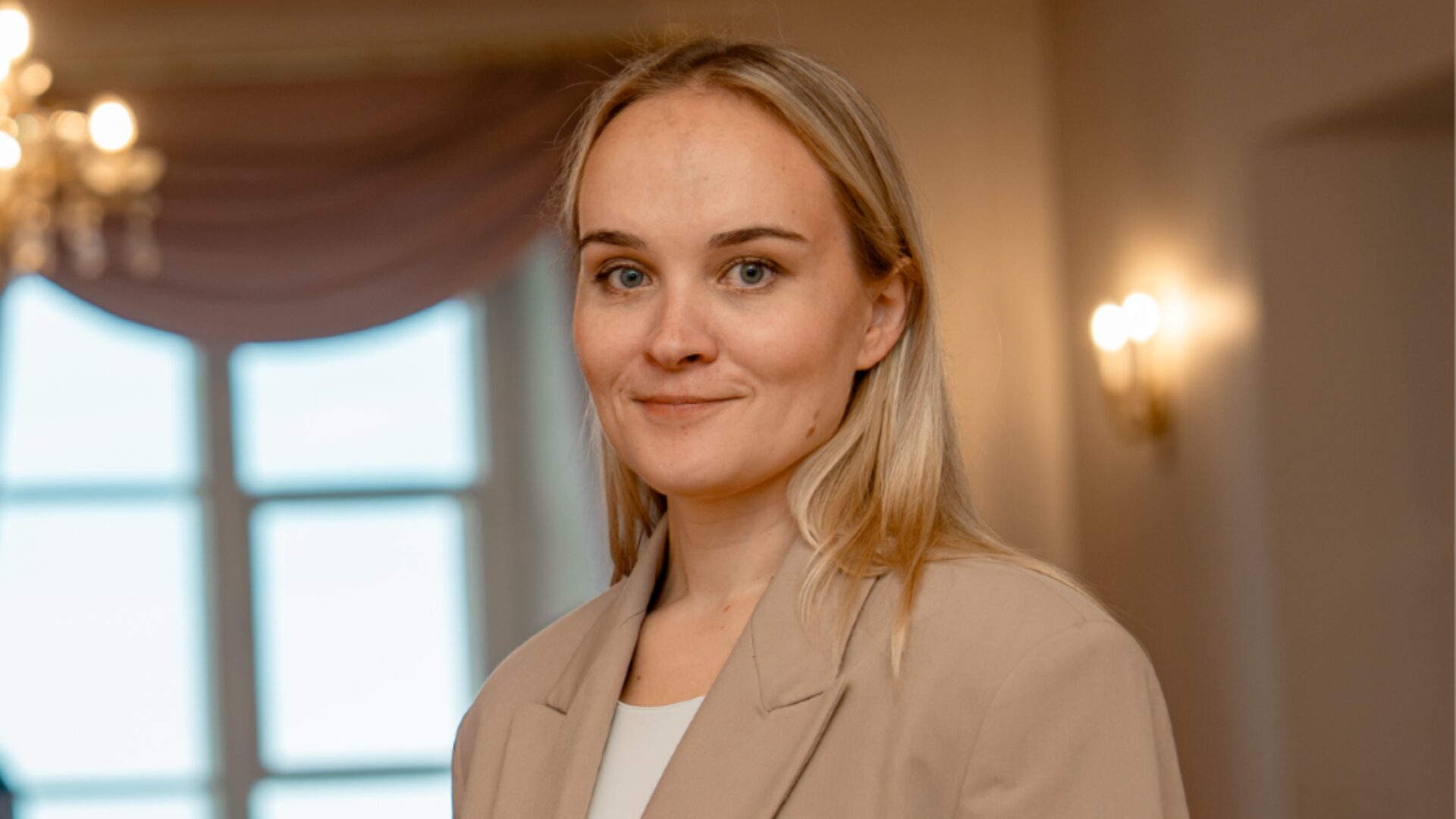
Recent years have transformed healthcare into a topic that cannot be discussed solely among doctors and officials. An ageing population combined with the spread of chronic diseases is increasing cost pressures year after year, bringing healthcare to a point where the need for greater efficiency cannot be ignored, writes Helen Staak, Head of HealthTech at Tehnopol Science and Business Park. She discusses the challenges facing the healthtech sector in 2026, particularly in Germany, and highlights what Estonia can offer to help overcome them.
As each year passes, we see this more and more as a test of social resilience, which on the one hand requires innovation, but on the other hand must be implemented in a way that does not overly disrupt a system that is, in some ways, inefficient but still functional and fundamentally essential to societies.
Health technology – digital solutions, medical devices, artificial intelligence, biotechnology, personalised medicine – is not a panacea here, but it is clear that we cannot move forward without it.
Looking at the global picture, one trend is clearer than others: the focus is shifting from individual future solutions and technological gadgets towards systemic changes. In healthcare, we are no longer searching for better diagnostics or smarter algorithms, but for solutions that would actually reduce the workload of doctors, shorten treatment queues, reduce the amount of administrative work in the sector, and allow patients to be treated at home for longer, rather than keeping them in expensive hospital care.
Artificial intelligence is gradually moving from the experimental phase into everyday workflows, with remote services and home hospital care becoming the norm in many countries. An important issue associated with all of this is the security of sensitive health data.
The global market for digital health solutions was worth approximately €266 billion last year, and analysts predict that it will exceed €1.7 trillion in ten years. The market is expected to grow by around 20% each year. The market for artificial intelligence-based solutions in healthcare is also expected to exceed €400 billion by 2033, reflecting the rapidly growing demand for automation and predictive analytics.
European healthcare: slow but inevitable change
The European health technology market was estimated to be worth around €82.2 billion this year, and is expected to grow to over €188 billion by the end of the decade. The European market is growing slightly slower than the global market, at around 18% per year.
Thus, changes in Europe are slower than in the US, but this is not solely due to conservatism. European healthcare systems are built on solidarity and universal access, which means that technological and innovative developments must go hand in hand to ensure that all people have equal and fair access to healthcare services. In addition, Europeans are accustomed to a somewhat cautious approach to data protection.
Before technology can significantly transform the system, confidence in this area must also be ensured. The European Union’s Artificial Intelligence Regulation and the European Health Data Space (EHDS) are steering healthcare increasingly towards interoperability and data-driven approaches. This means that preference is given to solutions that do not create new data silos but fit into existing systems, respect patient rights, ensure data security, and are evidence-based.
Estonia has developed a strong health technology ecosystem in which companies, healthcare providers, patient organisations, research institutions, and the state work closely together to support the development of the field and create an environment that promotes the adoption of new health technology services and products. The ecosystem enables companies to be supported at every stage of their development – from the idea and piloting to solutions that have been tested and validated in a real environment. This gives Estonia a clear competitive advantage in both the wider adoption of solutions in the domestic market and in exports.
Germany: a large system, a lot of tension, and challenging changes
Germany is unique in the European context. It is the continent’s largest healthcare market, with a well-funded but structurally fragmented and digitally slow system. Historically, the federal approach to medical services and the rigid separation of outpatient and inpatient care have been siloed. It is precisely this contradiction – money and competence are available, but flexibility and readiness for change are lacking – that defines Germany’s healthcare technology needs and readiness for the coming year.
German hospitals and healthcare facilities are under pressure from many sides. On the one hand, national reforms such as hospital reform (Krankenhausreform) and digitisation programmes, above all the Hospital Future Act (KHZG), are forcing systems to modernise rapidly. On the other hand, labour shortages – especially among nurses and family doctors – have become critical, and an ageing population is increasing the need for treatment for chronic diseases.
The political goal of shifting care from hospitals to outpatient and home settings is logical, but without functioning digital solutions, it will remain on paper. At the same time, there is a clear nationwide mandate to quickly create a digital infrastructure – both the money and legislative support are there. A separate fast-track process, DiGA Patwhay, has also been created to bring digital healthcare solutions to market quickly. On the one hand, it is demanding in terms of clinical evidence and on the other, it requires simple and invisible integration with current solutions.
In addition to technical complexity and historical baggage, Germany has a particularly strong data protection culture. Trust does not arise on its own, and confirmation from a local reference, i.e., a local hospital or research institution, is often a prerequisite for market entry. Germany is certainly not ready to flexibly try out different things, but is looking for long-term partnerships where technology, clinically proven performance, and regulatory compliance are in a healthy balance.
The German digital healthcare market was estimated to be worth around €12.4 billion last year. It is expected to grow by nearly a quarter annually, reaching more than €40 billion by 2030. For Estonia, cooperation with the healthcare market of this large country is an excellent opportunity: we can offer realistically functioning, already validated solutions that would help Germany overcome its current problems.
A small country, but with systematic experience
Approximately 99% of Estonian health data is digitised, and patients and doctors use e-health solutions on a daily basis. We have achieved a 100% readiness level in Europe’s digital decade e-health ranking, which means that Estonia is already ready to meet the EU’s 2030 digital targets.
We have developed a national digital healthcare infrastructure over more than 20 years, during which almost all health data has been digitised. Public trust and data protection are supported by secure X-tee and blockchain-based solutions. In addition to the above, Estonia has a unique gene bank, providing a strong foundation for strategic, data-driven innovation.
E-prescriptions, e-consultations and data sharing are part of our everyday healthcare practice, to which the whole society has adapted. This has supported the creation of a rich ecosystem of companies offering proven remote monitoring, digital treatment and telemedicine solutions. Our broad-based experience makes Estonia, in principle, a nationwide test environment, a living laboratory where the government and legislators, healthcare institutions, and technology companies work closely together.
Many Estonian healthcare technology companies have been initiated by doctors and scientists themselves. So, the solutions are based on real clinical needs and solve real-life problems.
In addition to practising physicians, our healthcare technology is based on a deep heritage of cutting-edge research, centred on the nearly 400-year-old University of Tartu, as well as TalTech, the Institute of Health Technology, and the Centre of Excellence in Health and Food Technologies. The result is a competitive landscape of deep tech companies, including projects at every stage of the pharmaceutical and biotechnology value chain, from research and development and antibody discovery to GMP-compliant contract manufacturing (CDMO) and high-quality reagent production. Among the areas of activity, the deep technology sector had the most health technology start-ups in 2024 (23%).
From Germany’s perspective, Estonia is a valuable partner within the European Union, offering reliable cooperation and, at the same time, a flexible and practical testing environment for developing and validating new health technology solutions. Added to this is our international experience – as in other sectors, Estonian health technology start-ups understand that our market is too small and are building solutions with export potential from the outset. One example of our cross-border projects is the largest e-prescription system to date. Estonian companies have collaborated with leading university hospitals in Germany.
What does Estonia have to offer Germany?
Our experience is important for Germany for two reasons. Firstly, Estonia offers a working model for combining data security with everyday use of solutions. As mentioned, this is an extremely sensitive issue in Germany. Second, the health technology solutions developed in Estonia are based on practical use cases and the daily work of healthcare providers, which have focused on efficiency, ease of use, and integration with workflows.
Estonia’s strength lies in its systematic experience of how digital health solutions can realistically support the functioning of 21st-century healthcare. This experience makes it possible to reduce the administrative burden on doctors, support the safe treatment of chronic patients in their home environment, and develop a data infrastructure that serves both patients and the healthcare system reliably and securely.
In 2026, the central question in health technology will no longer be whether a particular technology works, but how it integrates into the existing system and whether the healthcare system can implement it effectively. Estonia’s strength lies in the fact that we already have practical answers to many of these questions. This is what makes Estonia a valuable partner for Germany and other European countries.
This content is funded by the European Union – NextGenerationEU.